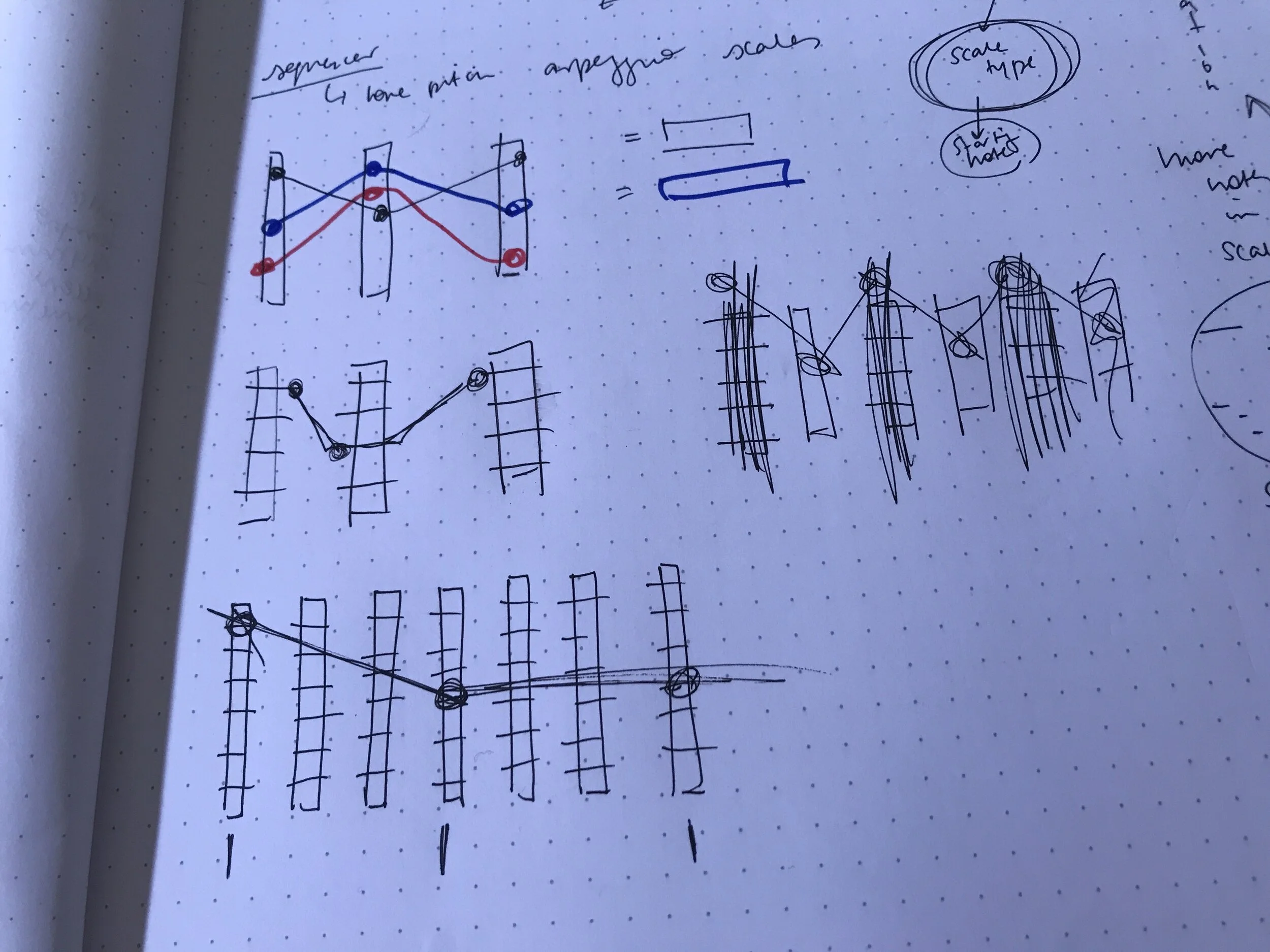
I did some thinking on how to combine the sound and color control together. I was inspired by this online arpeggio generator on the Chrome Music Labs site. This generator demonstrates not just what different scales sound like, of course, but how rich the musical texture can get by playing multiple notes within the same scale rapidly. From this, I came up with this mapping for the HSB values: hue - notes for the scale (C, D, E, F, G, A & B); saturation - duration of notes and length of notes; brightness - audio gain.
I am still sticking with 8-bit audio so it won’t sound as elegant as the Chrome Lab example but given the current situation, I think it’s best to just continue with what components I have. For the mapping to work, it will be a lot of list manipulation and picking pitches from this note table written by Brett Hagman.
HSB mapping
saturation explained further
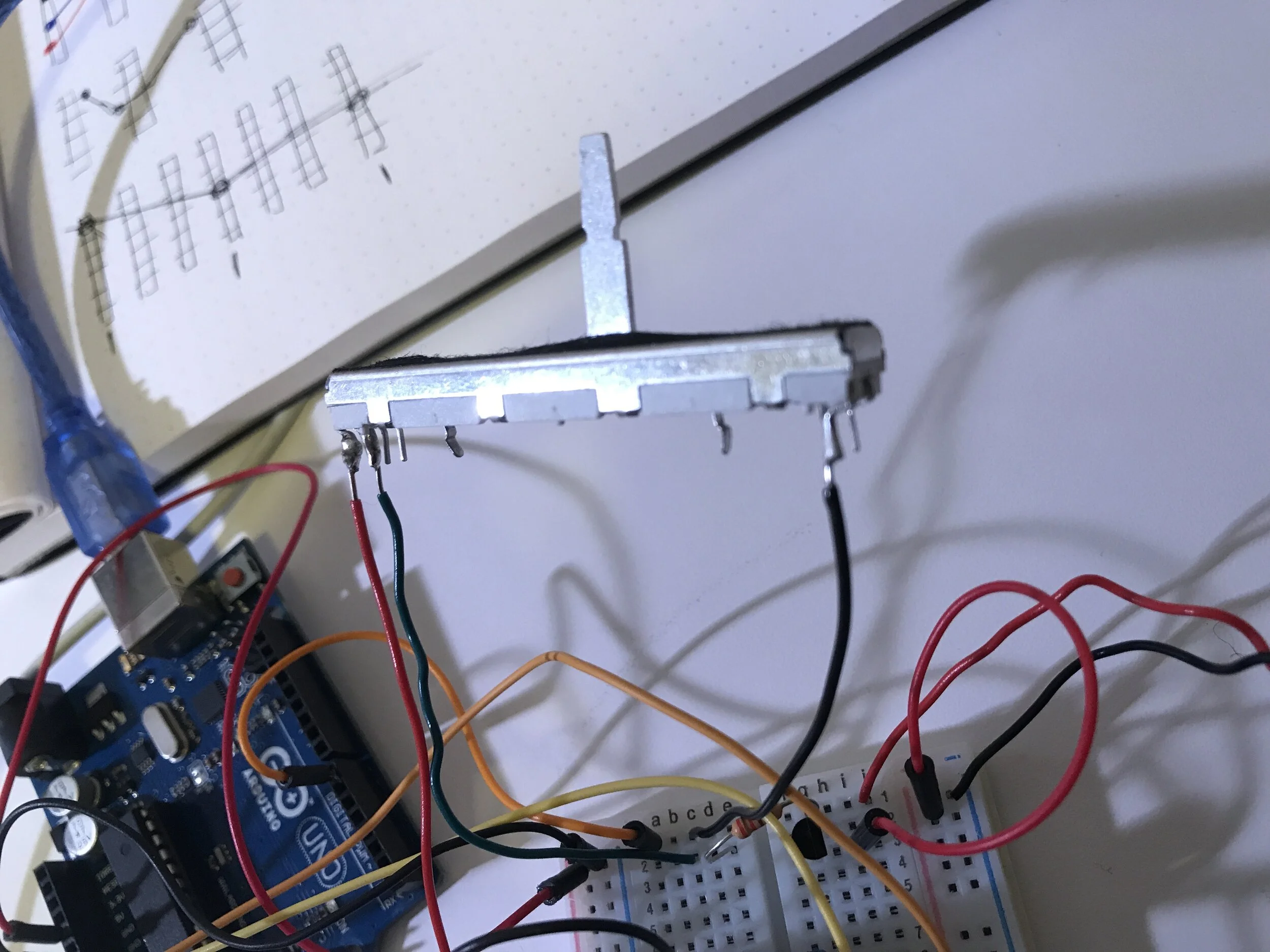
As for the circuit, it took me a minute to figure out the wiring for the 10k slider potentiometers I got. But I figured out that since it’s double linear, there are 2 sets of 3 pins that are typical in regular pots. I’m still not sure which one is the variable pin though. Still figuring that out. I know VCC and G are on either end but I’m not sure which is the variable since the resistance readings from my multimeter are the same regardless of which two pins on either side the pens come in contact with.
To keep as future reference:
Initially, I had a different idea of mapping the three potentiometers. Whatever position the pots are at, the interpolation of the points will determine where the notes in the rest of the scale is. The three would just be the beginning, middle and end points of the scale. The rest would be up to where the lines drawn would cross.