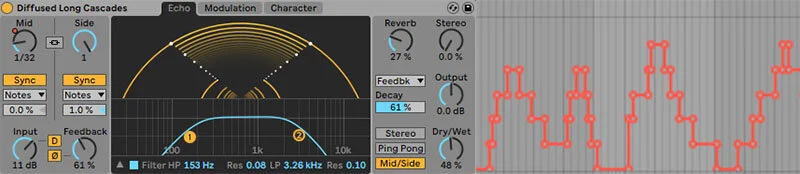
I started off this exercise by looking into binaural hearing which gives us the ability to localize the sound source. Our brains are able to figure out the direction from the difference in frequency, volume and time that the sound takes to reach each left and right ear. For the brain to determine the distance, the reverb, the pre-delay and frequency-response are factored in (source). Stereo systems give us the ability to embed spatial information to sound. By manipulating the factors aforementioned, one can create an experience for the listener where it feels like the sound source is coming from various angles or is moving around. In addition to thinking about how our brains process sound, I was also curious about the outer and inner shape of our ears (the pinna and cochlea) and how they contribute to our ability to listen to vibrations in air.
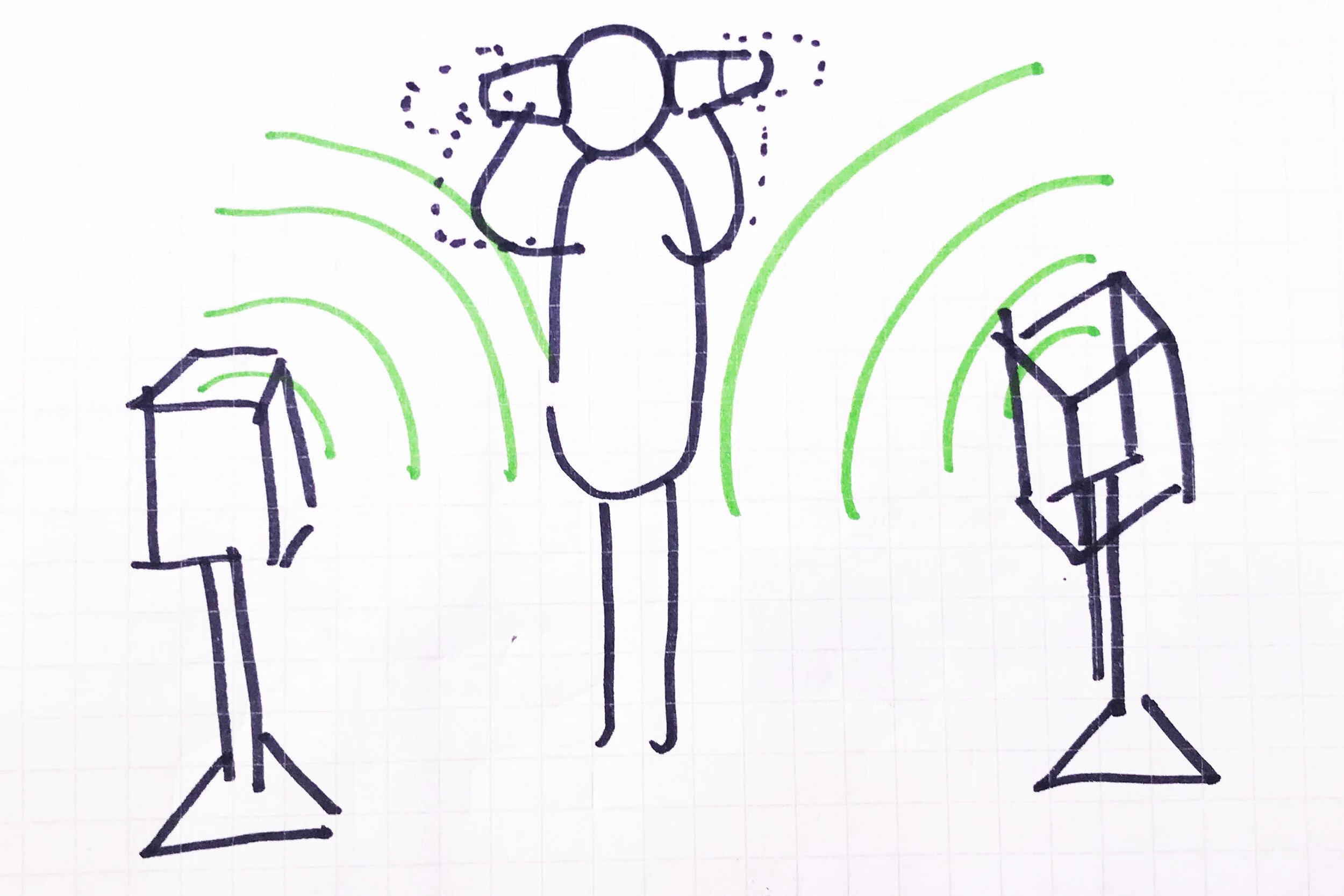
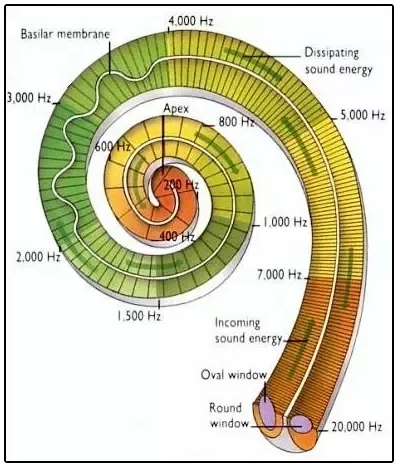
After learning about some of the basics of the anatomy of the ear, I was wondering what if the material of our pinna or the geometry of our cochlea was modified or enhanced. This became an observation based experiment and I tried putting different objects to my ears to see what changes I could notice while situated in front of a stereo system. The most noticeable was with glass. Other than looking ridiculous, it was actually really interesting how there was a perceived change in pitch (?) or maybe there was an amplification of a certain frequency because the glass was resonant and those ballpark frequencies.
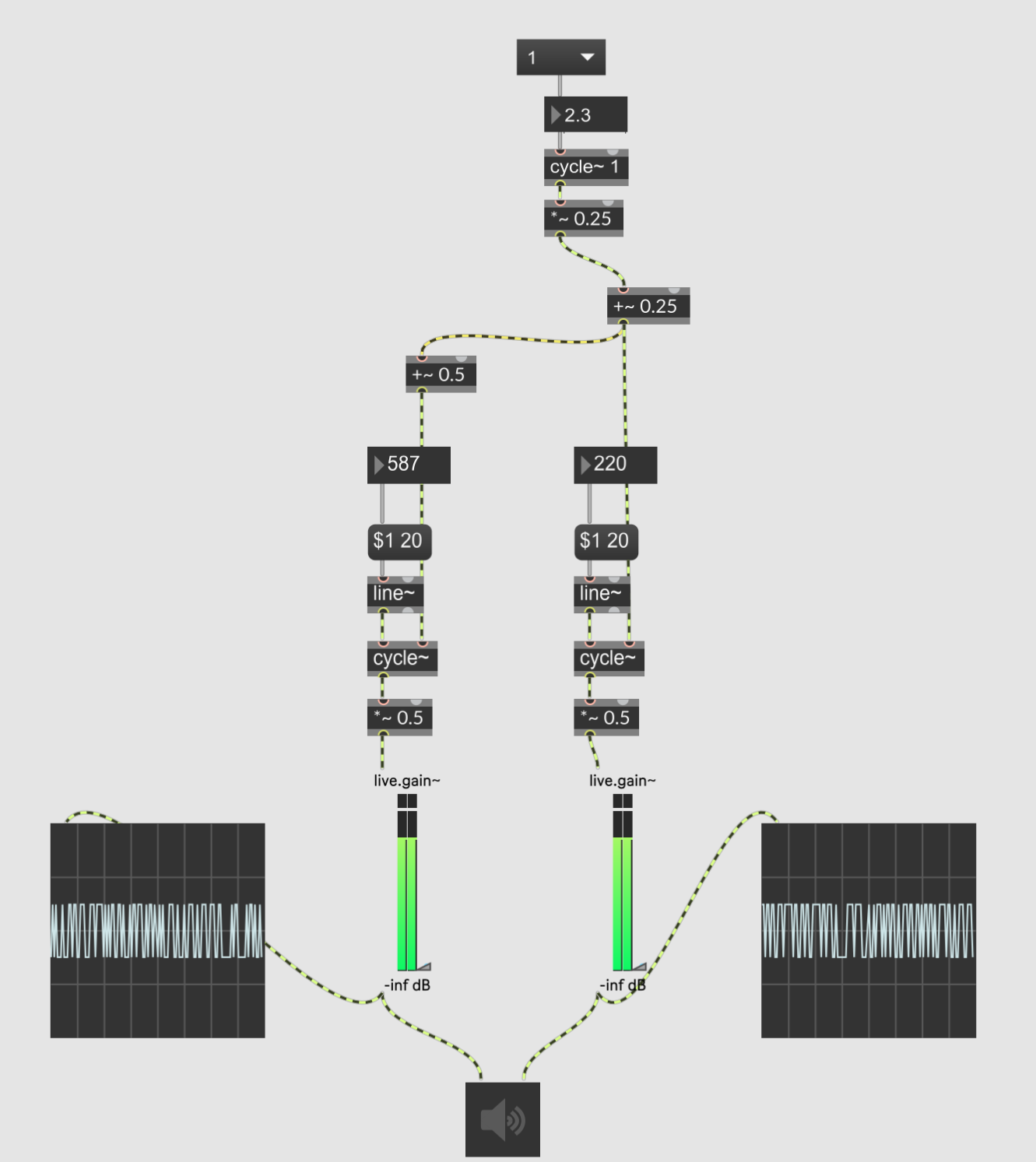
While standing in front of my stereo monitors with two glass cups on either side of my head, I tried to figure out the explanation for this phenomena. I had the cups over my ears and moved them back and forth while playing different frequencies of sound on Max MSP. From what I understand about the cochlea, different frequencies of sound get sensed at different parts of the spiral because the changing pressure and geometry. So applying that thinking to the glass cup, I’m assuming that its particular dimensions and thickness is catching a specific frequency’s sound wave inside the vessel (a standing wave???) and makes it ring louder while keeping the other frequencies out. I also tried it with one speaker playing one frequency higher than the other and so the difference was much more noticeable.

the different vessels I tried against my ears
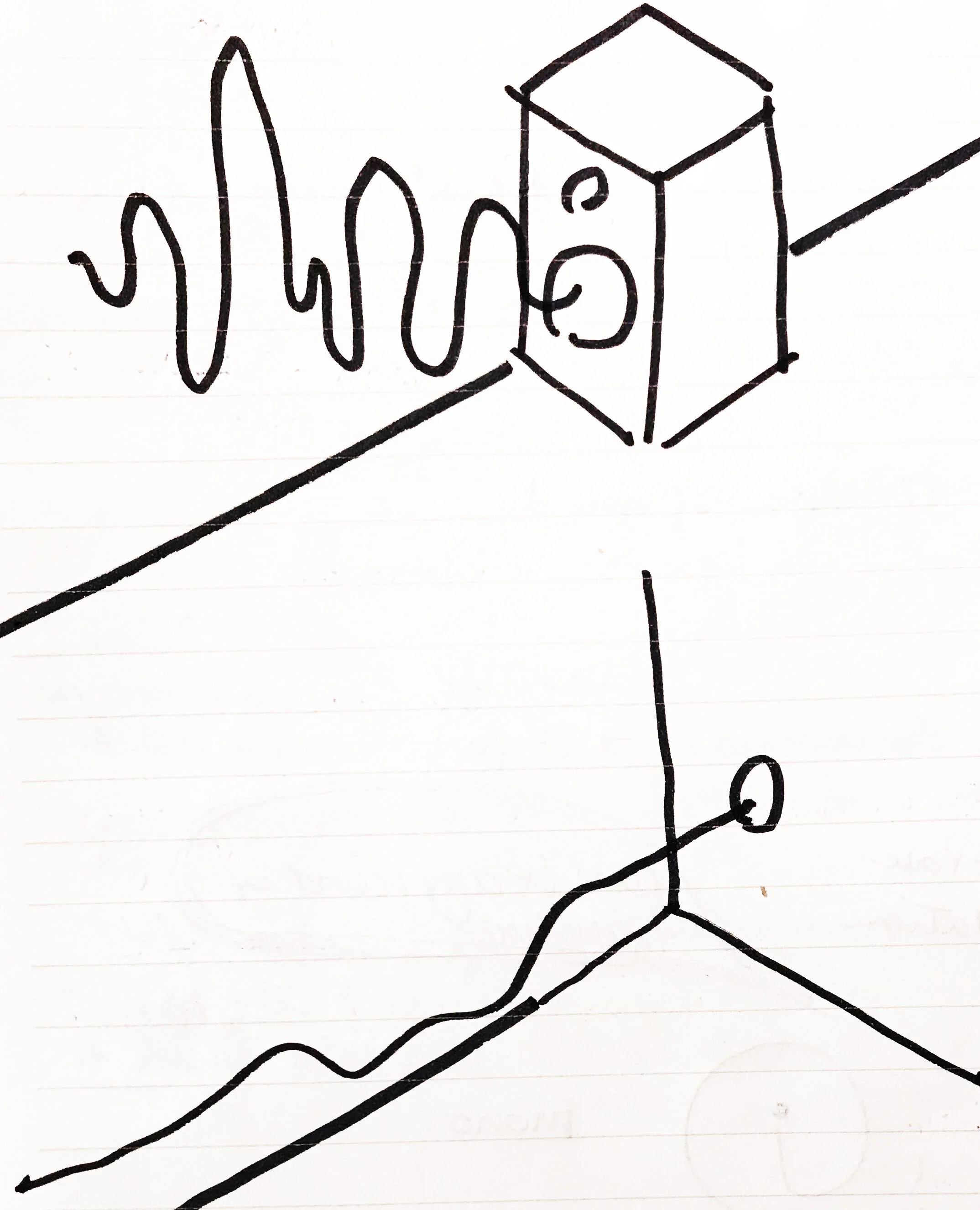
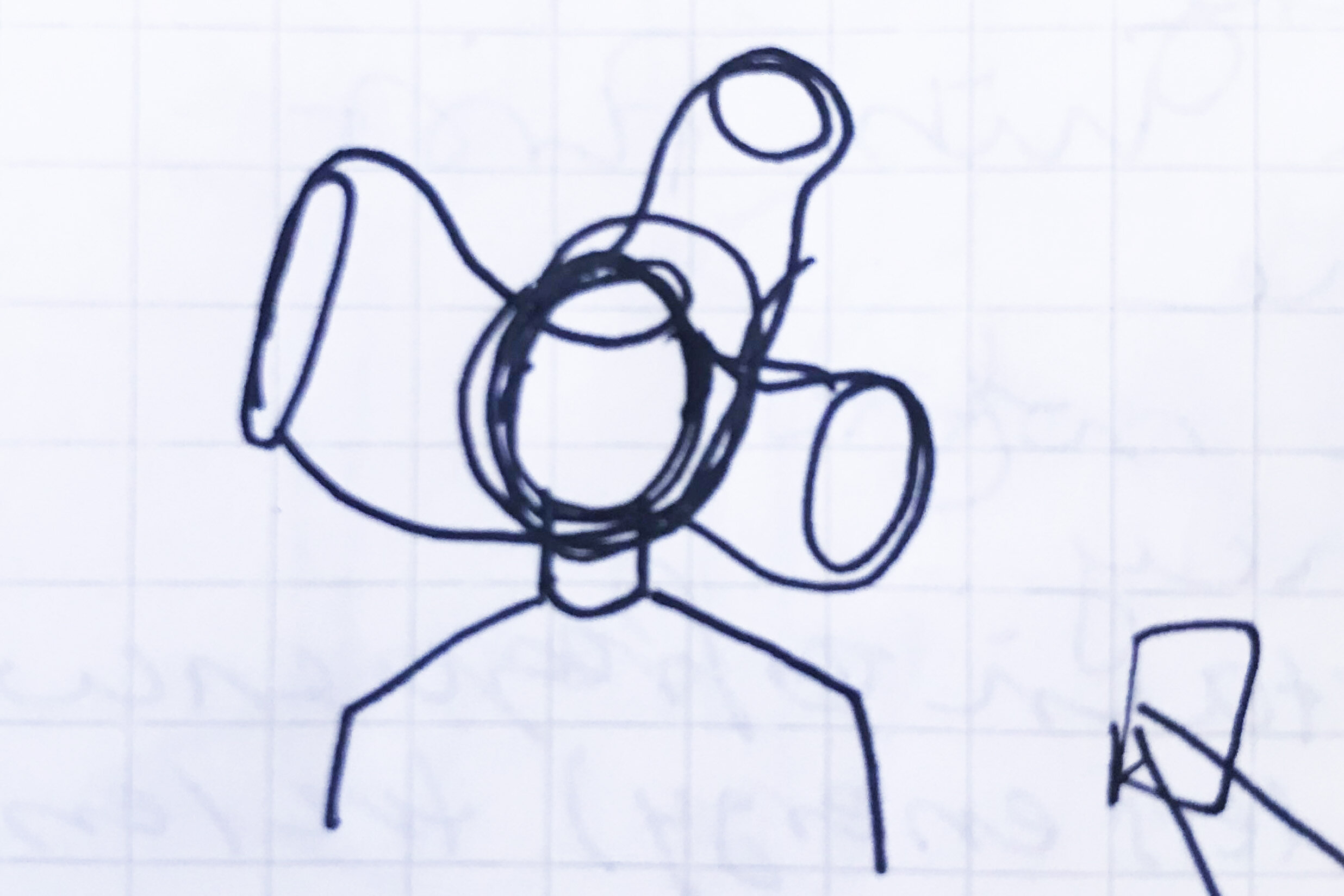
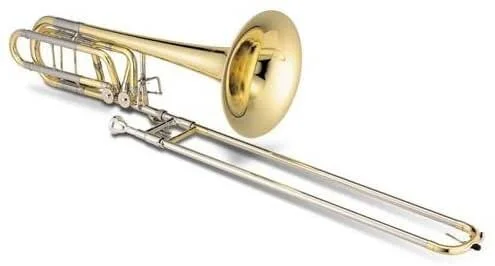
With this observation in mind, it was interesting to to think about introducing a radically different material to our organic hearing mechanism and what kind of contraption could be designed that affect the way our brain would decode information. The idea is headphones made of glass tubes with variable depth to catch the wavelengths of different frequencies. The user can move these however they wish to play it like an instrument and affect the sound they hear. Kind of like how you would play a trombone but for your ears only. Depending on the position of the paddles, different standing waves would be created, amplifying a particular sound frequency.
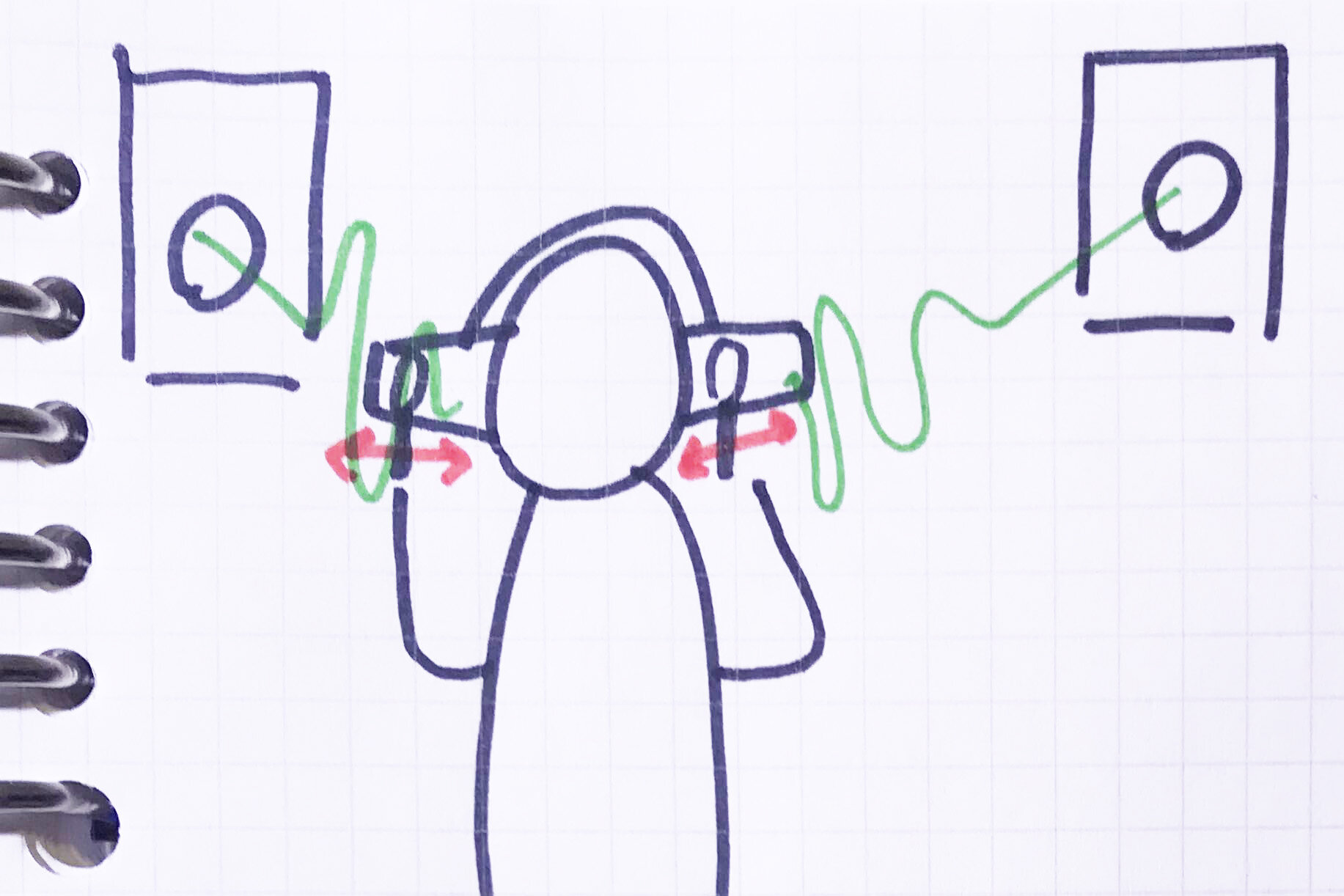
how one would listen with this contraption in a stereo set up
what if there are multiple openings?
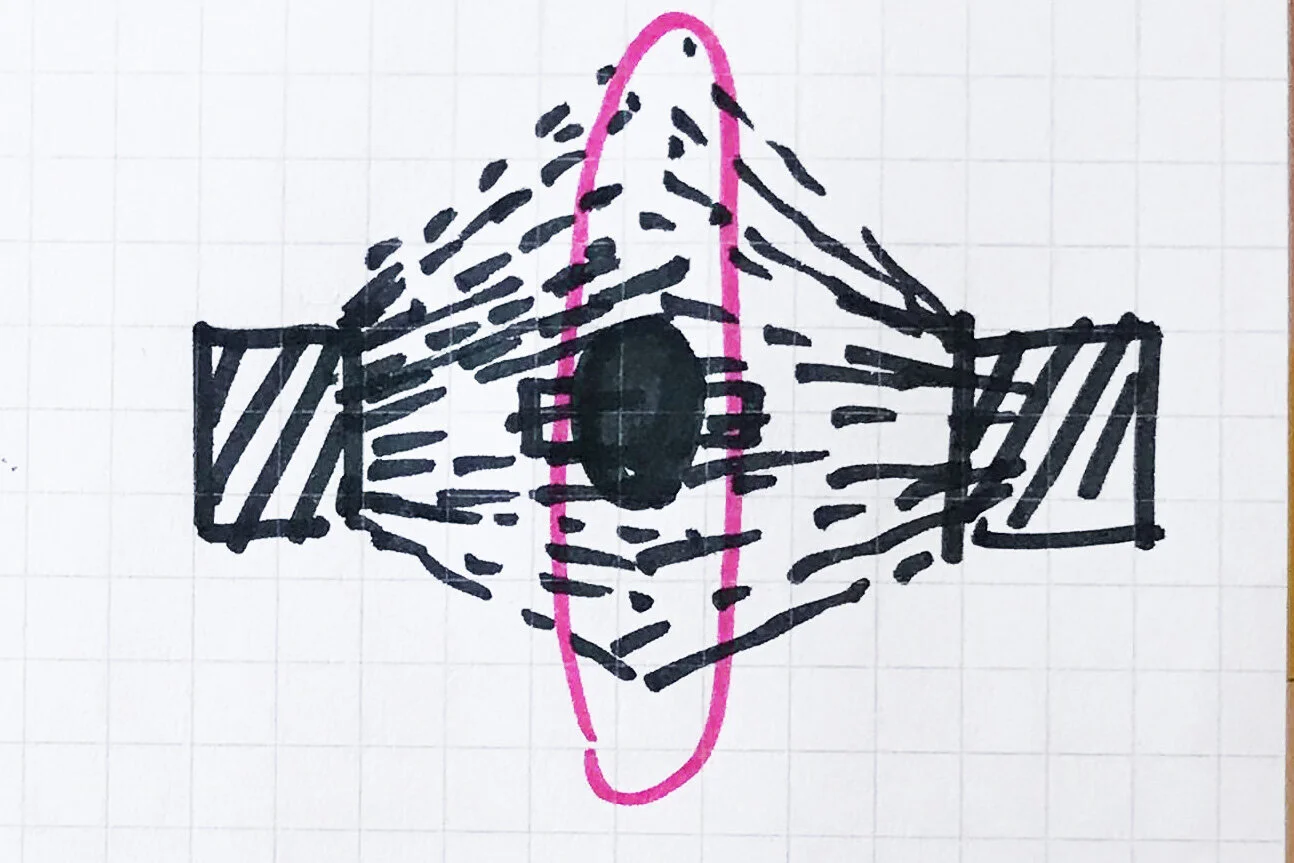
thinking about positioning which would affect the sound experience
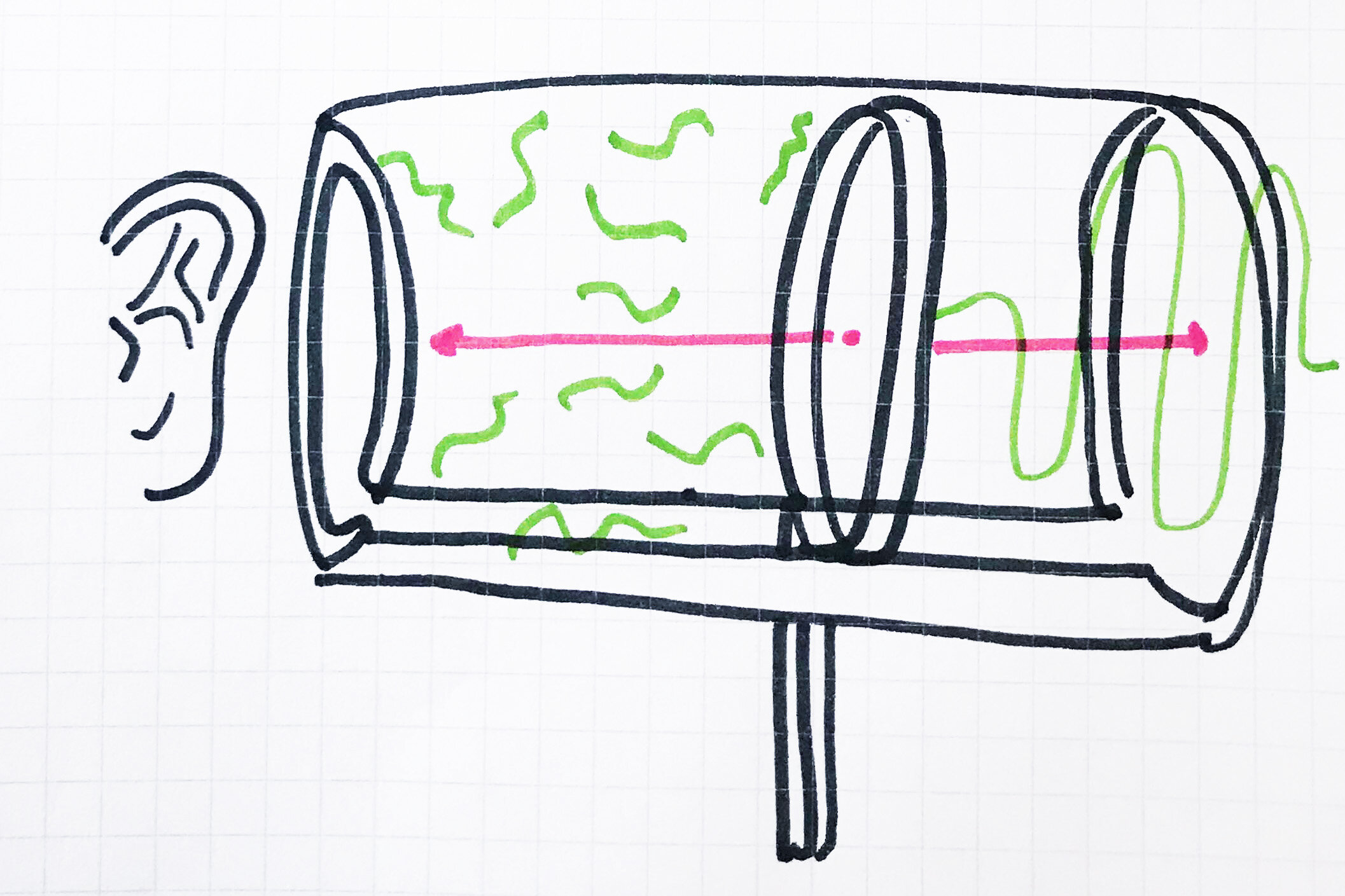
the “instrument” or listening device???
Simple patch to test the effect with the two glass cups.
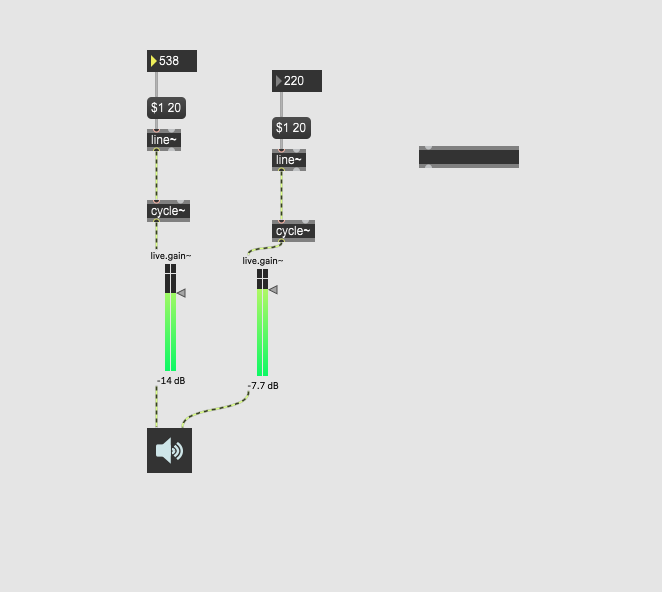
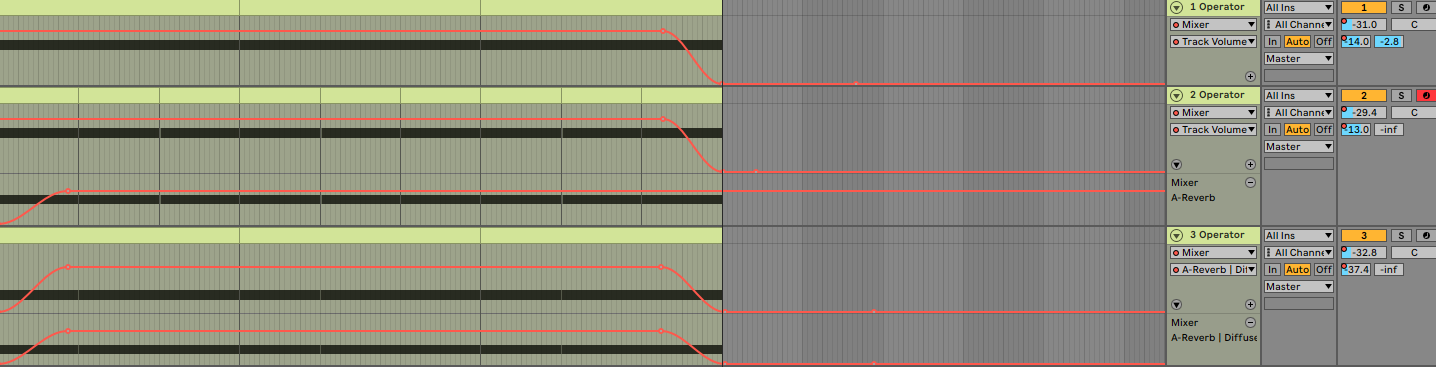
Max patch that mimics the effect without cups over ears. This is a patch that pans two different frequencies on two separate channels.