[PP] Plastic Pavilion
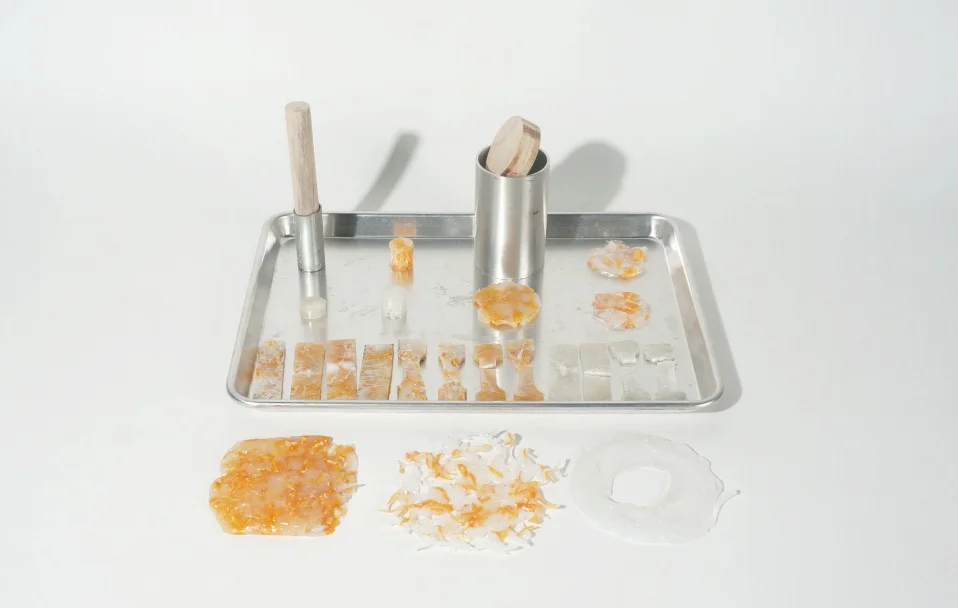
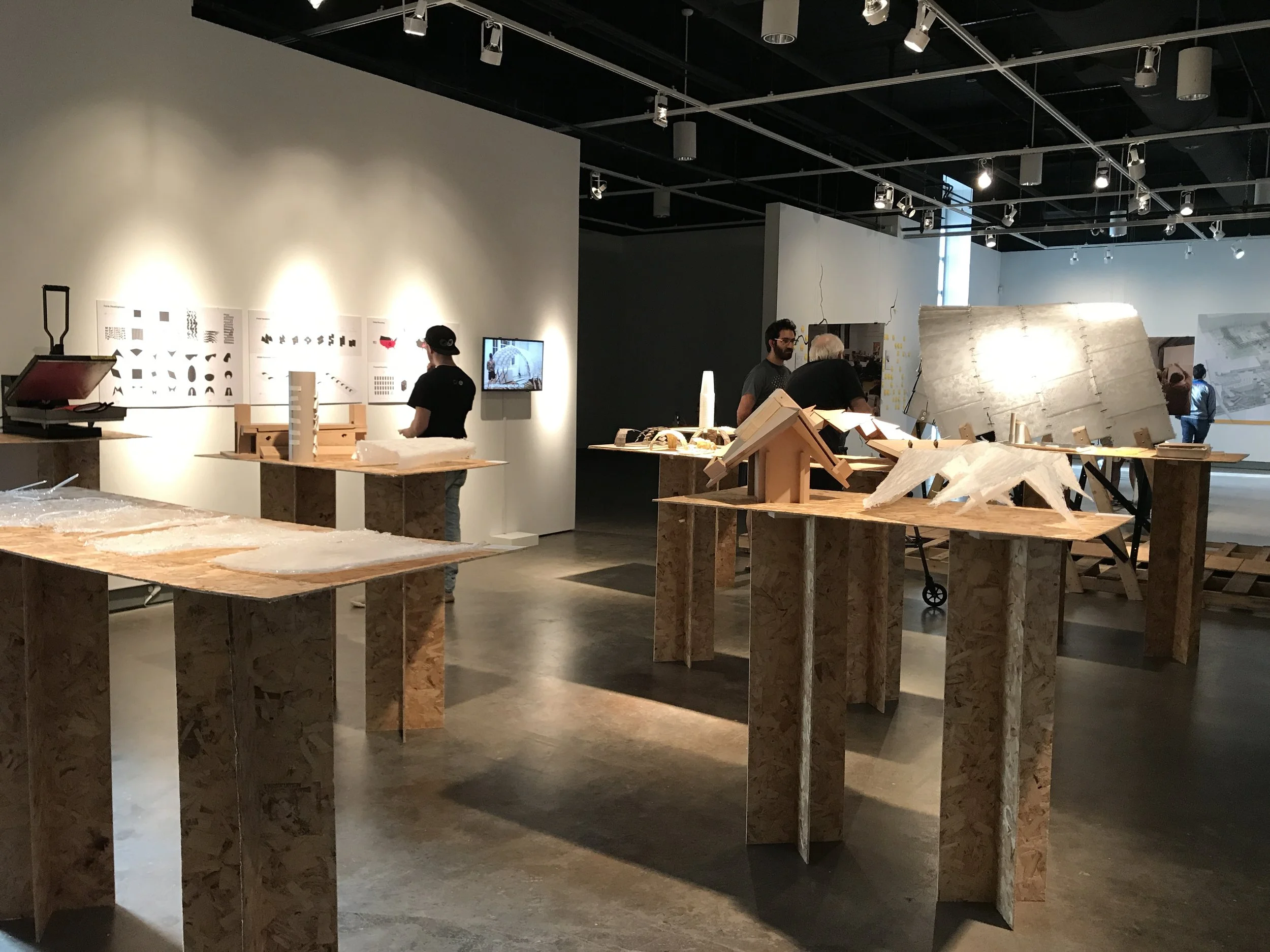
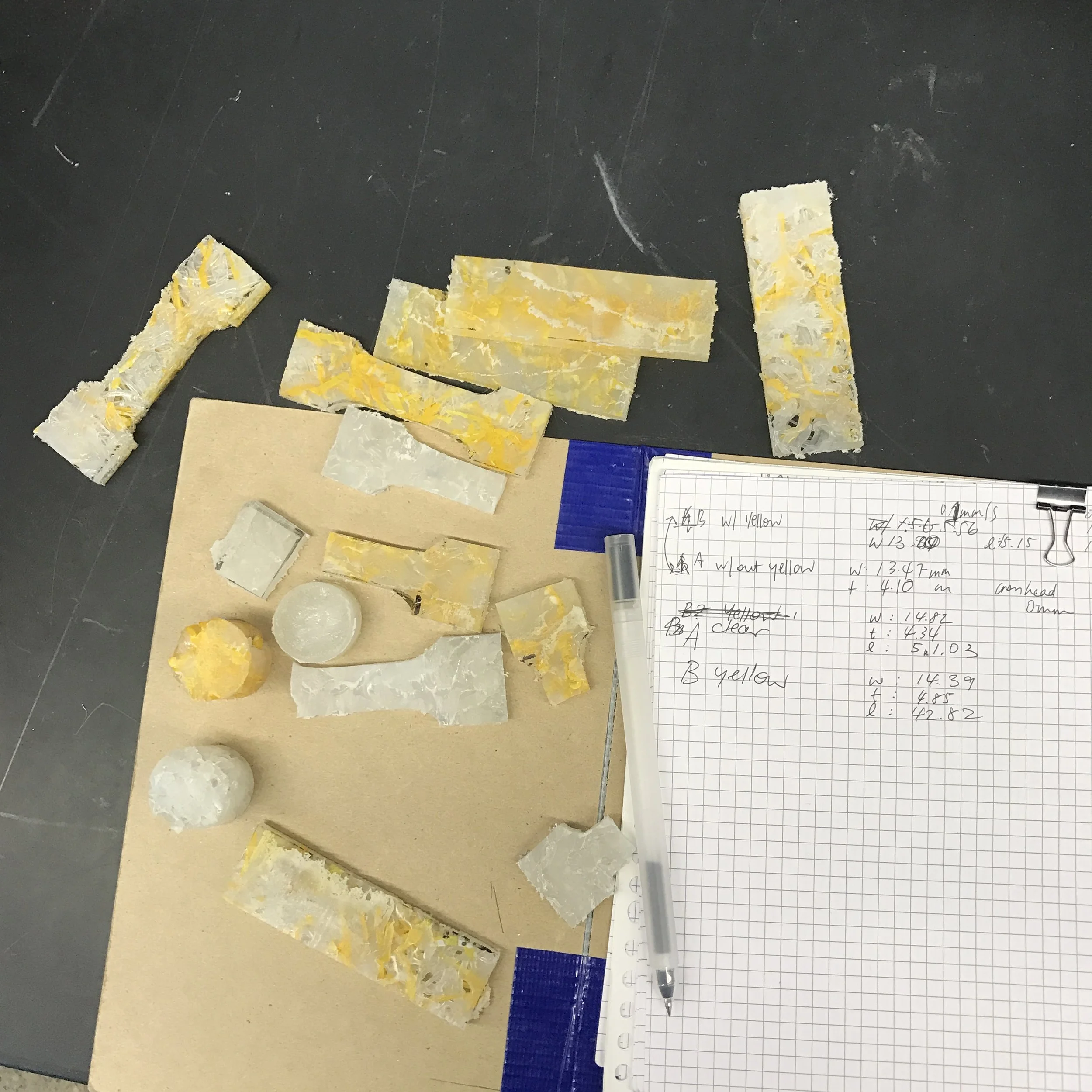
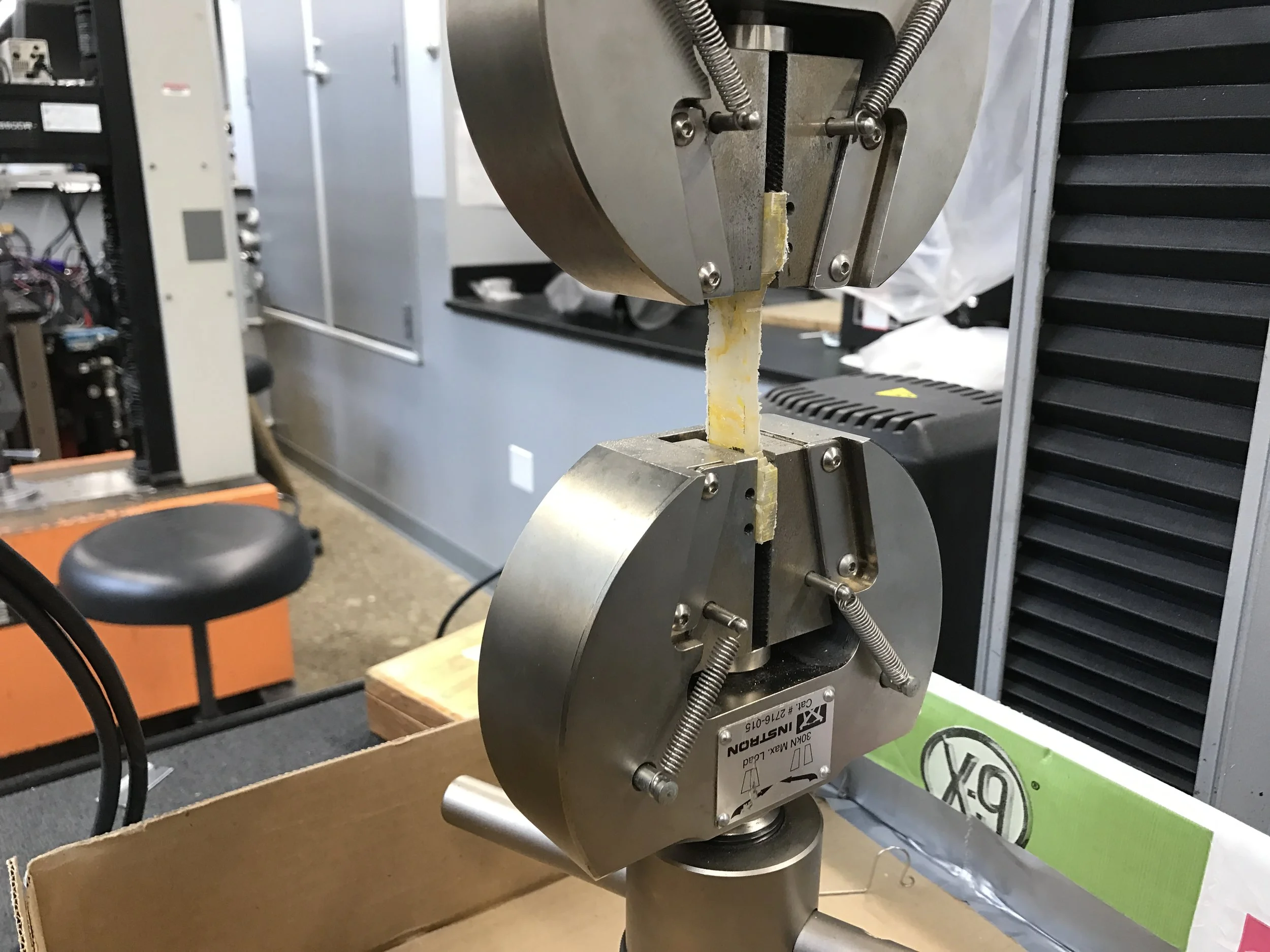
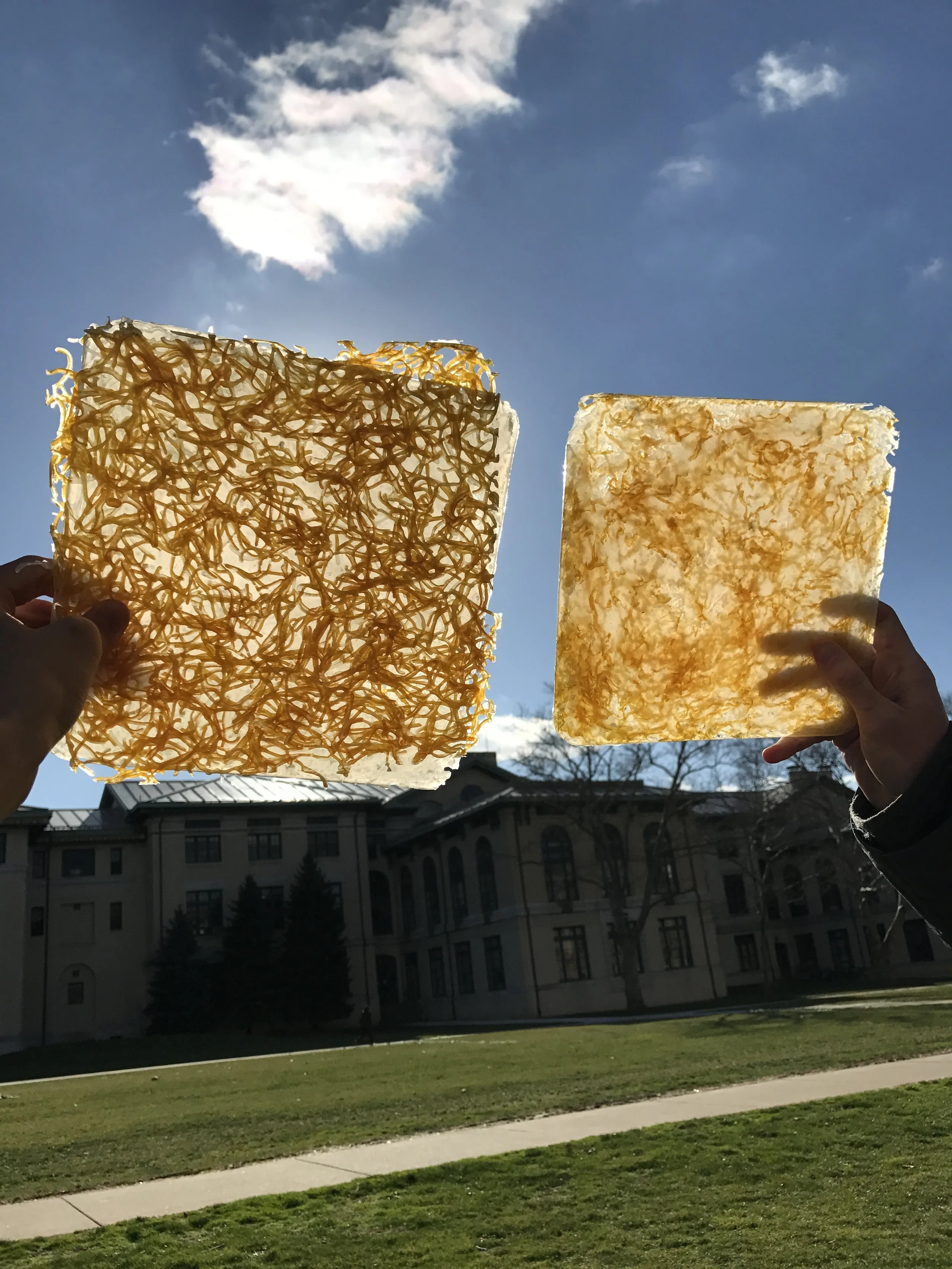
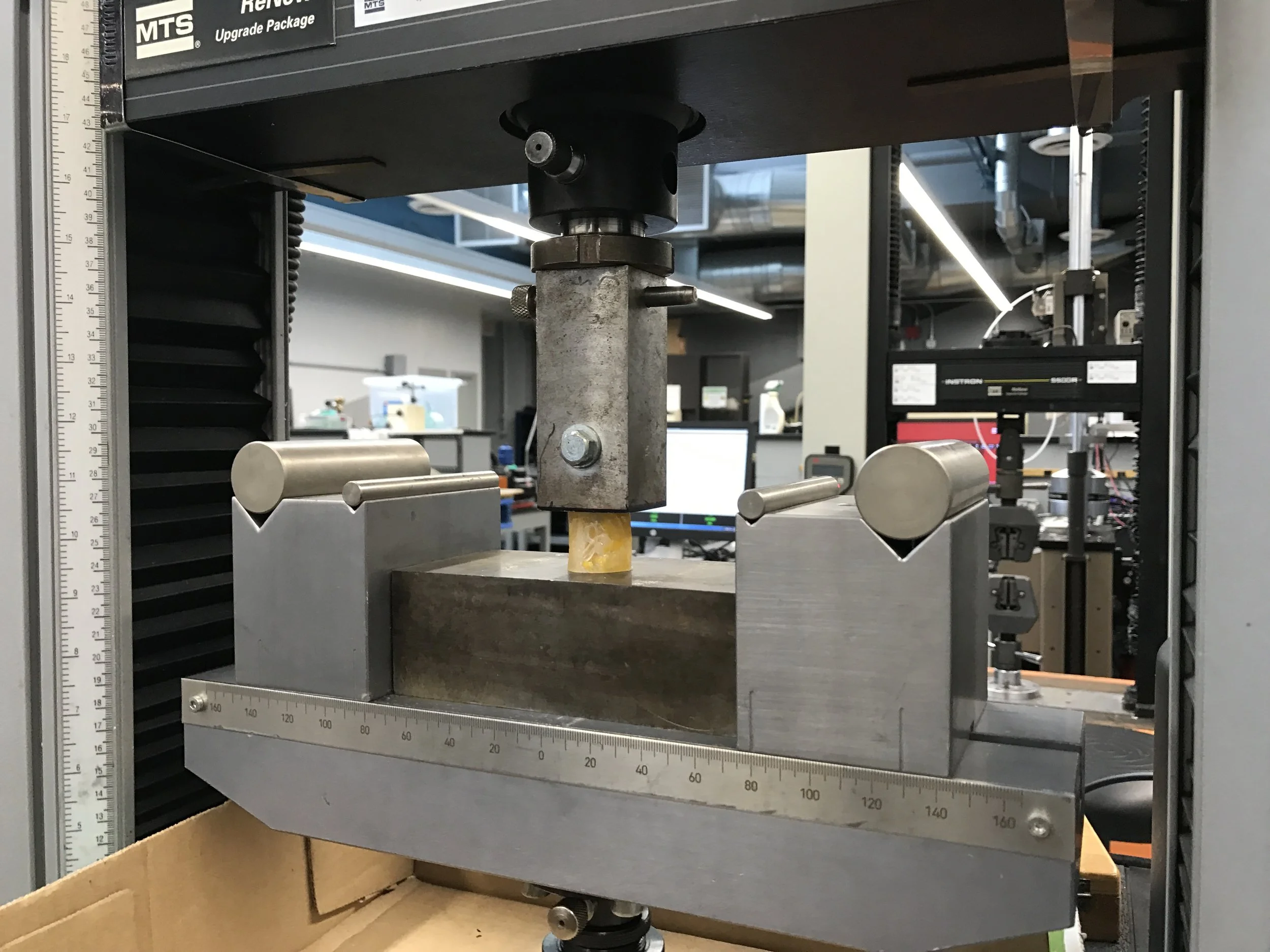
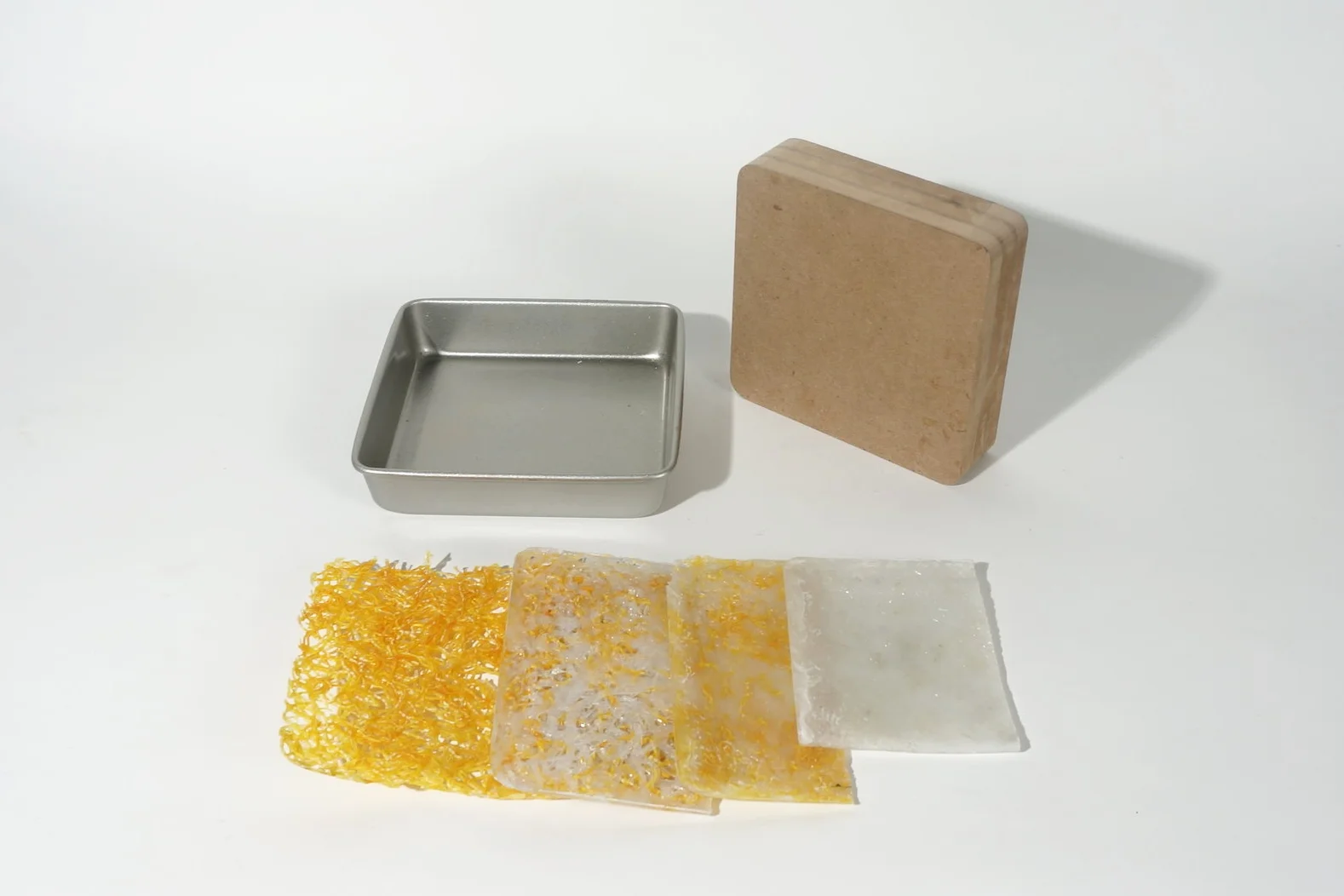
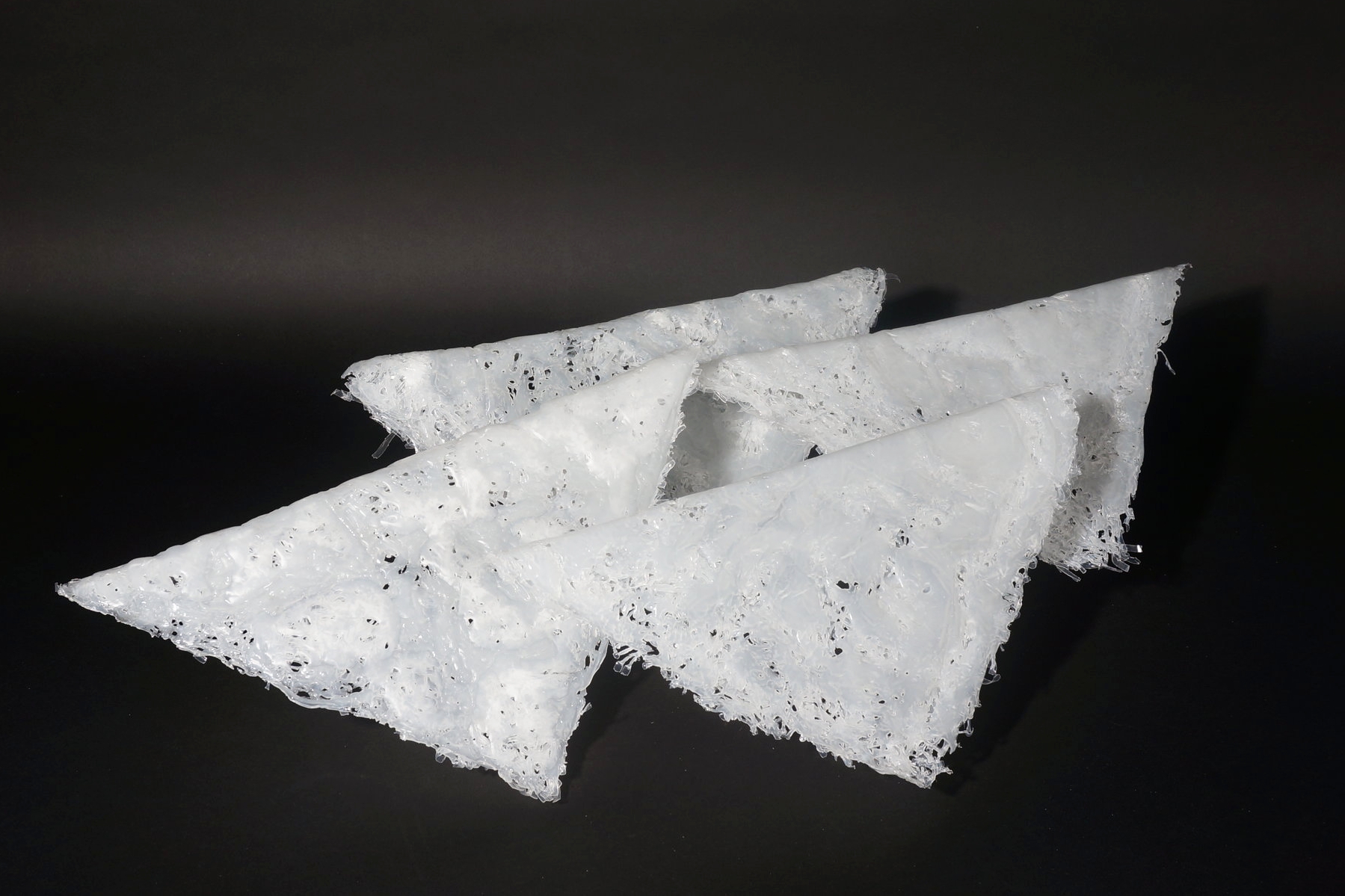
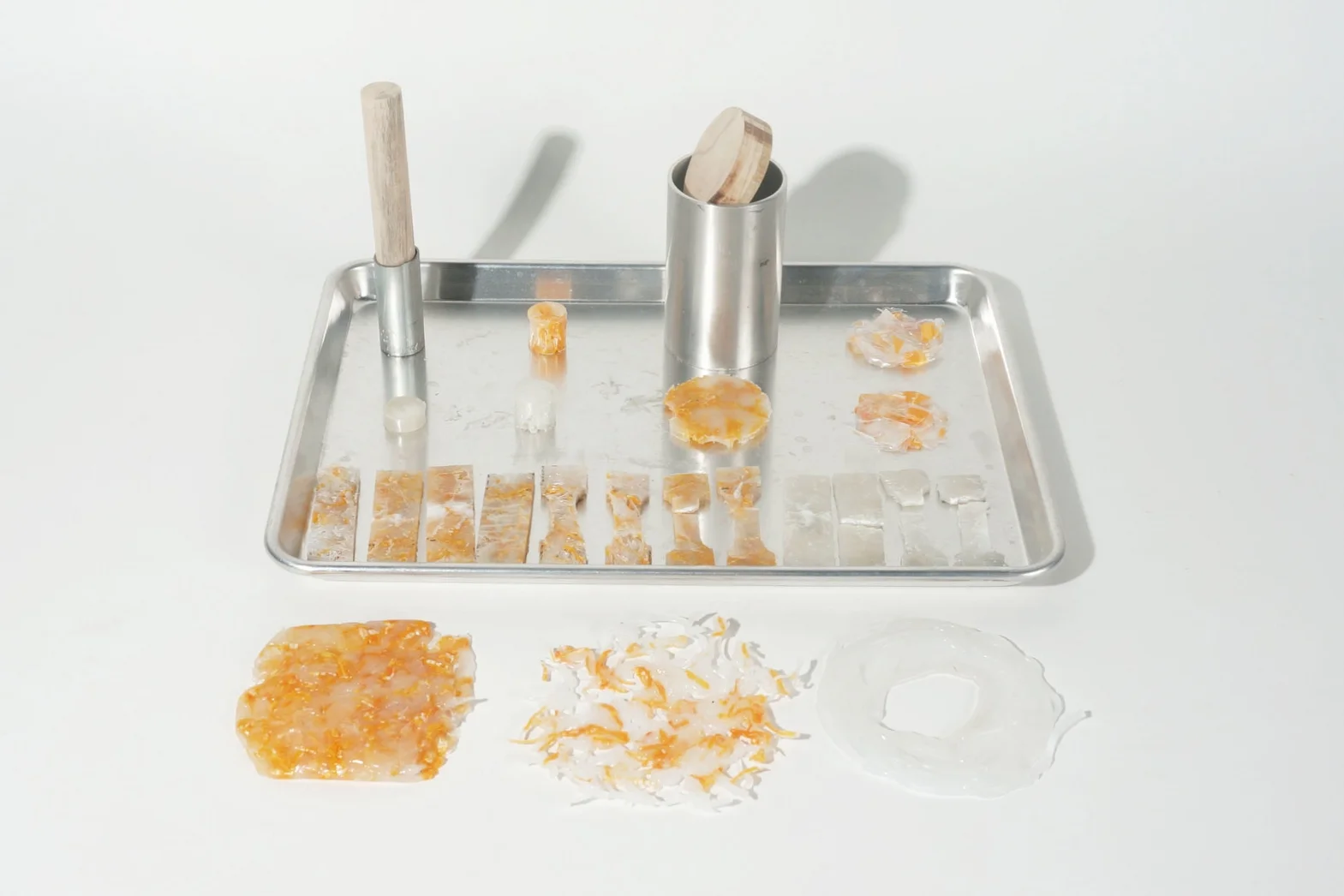
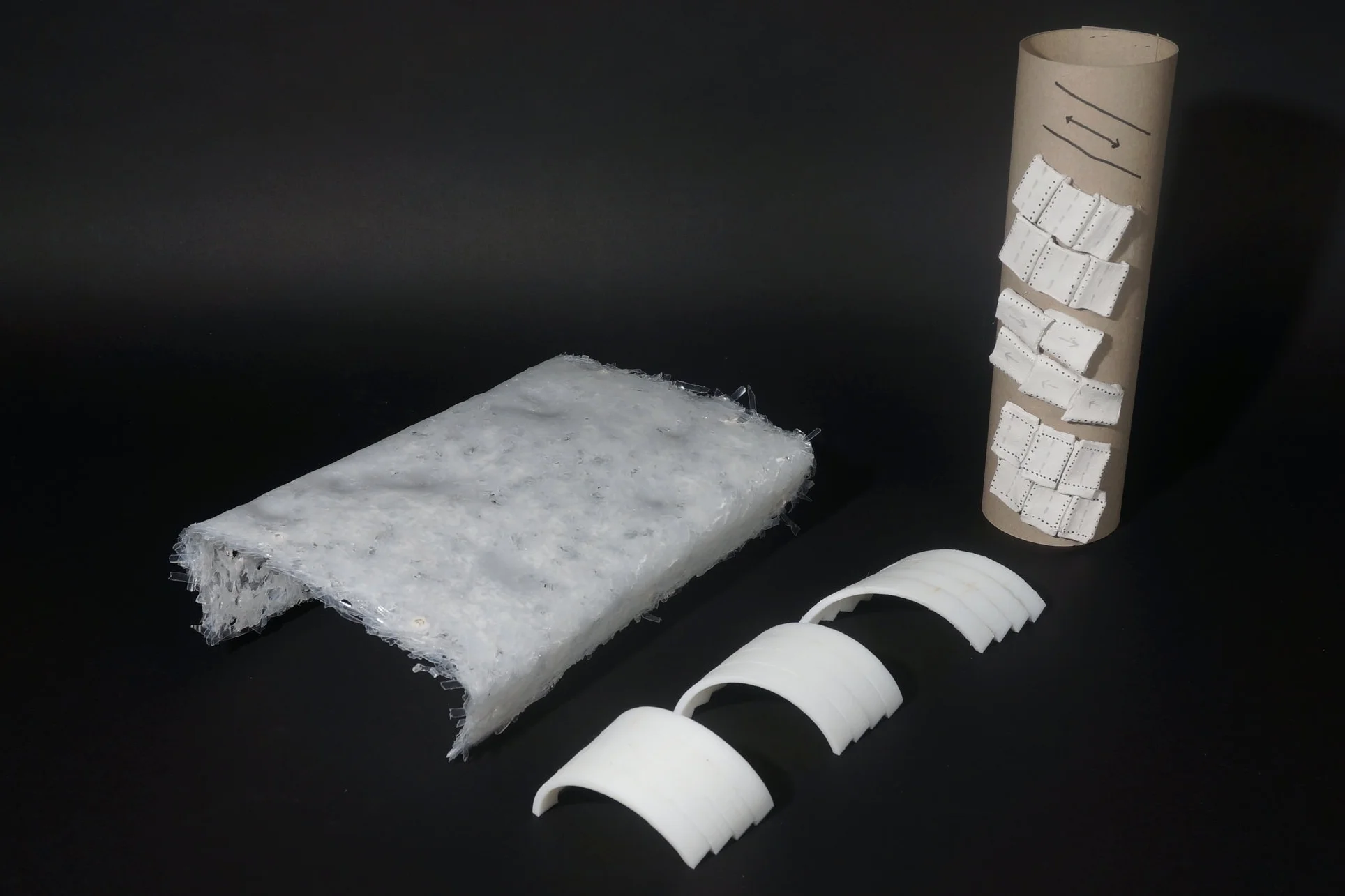
initial material experiments
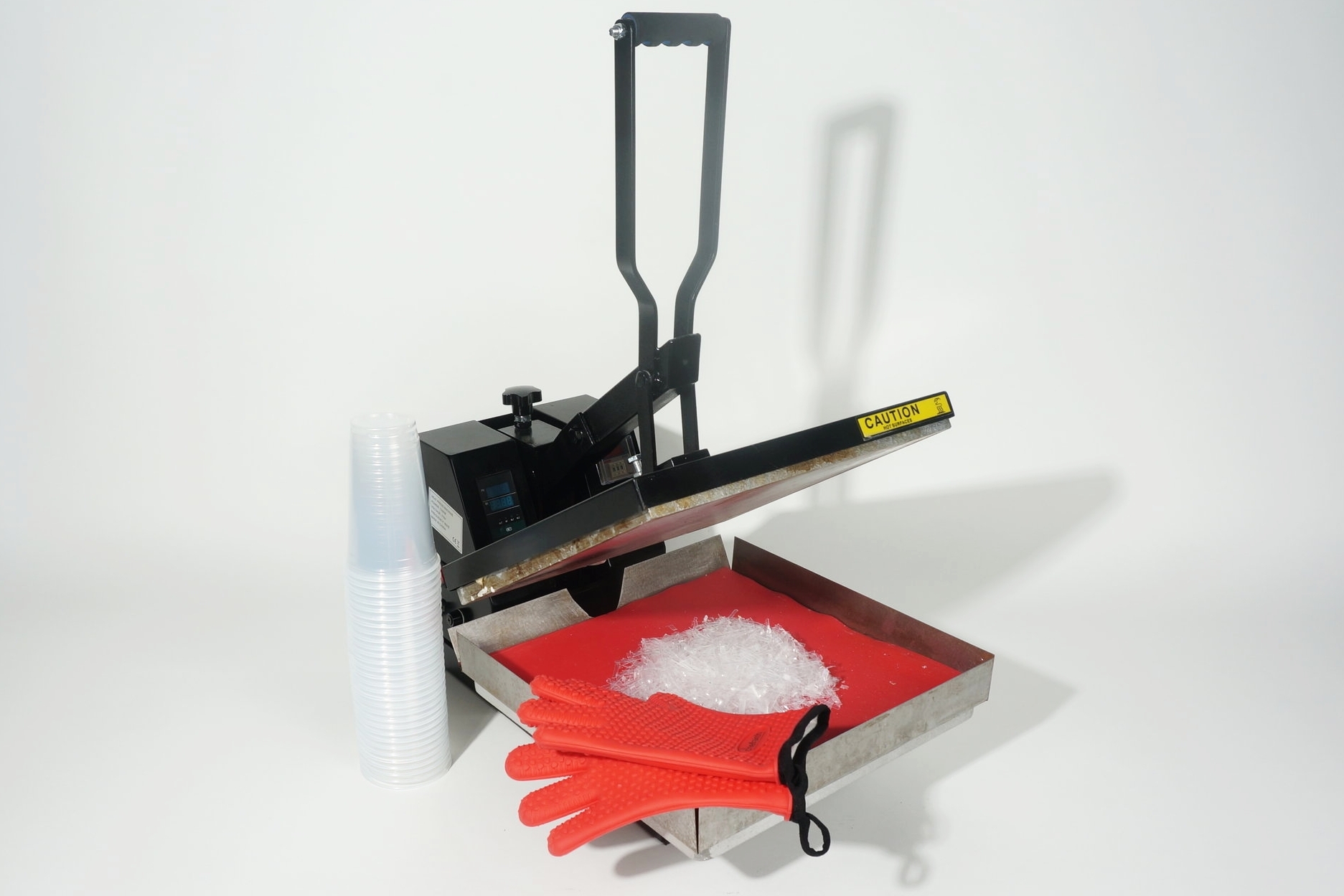
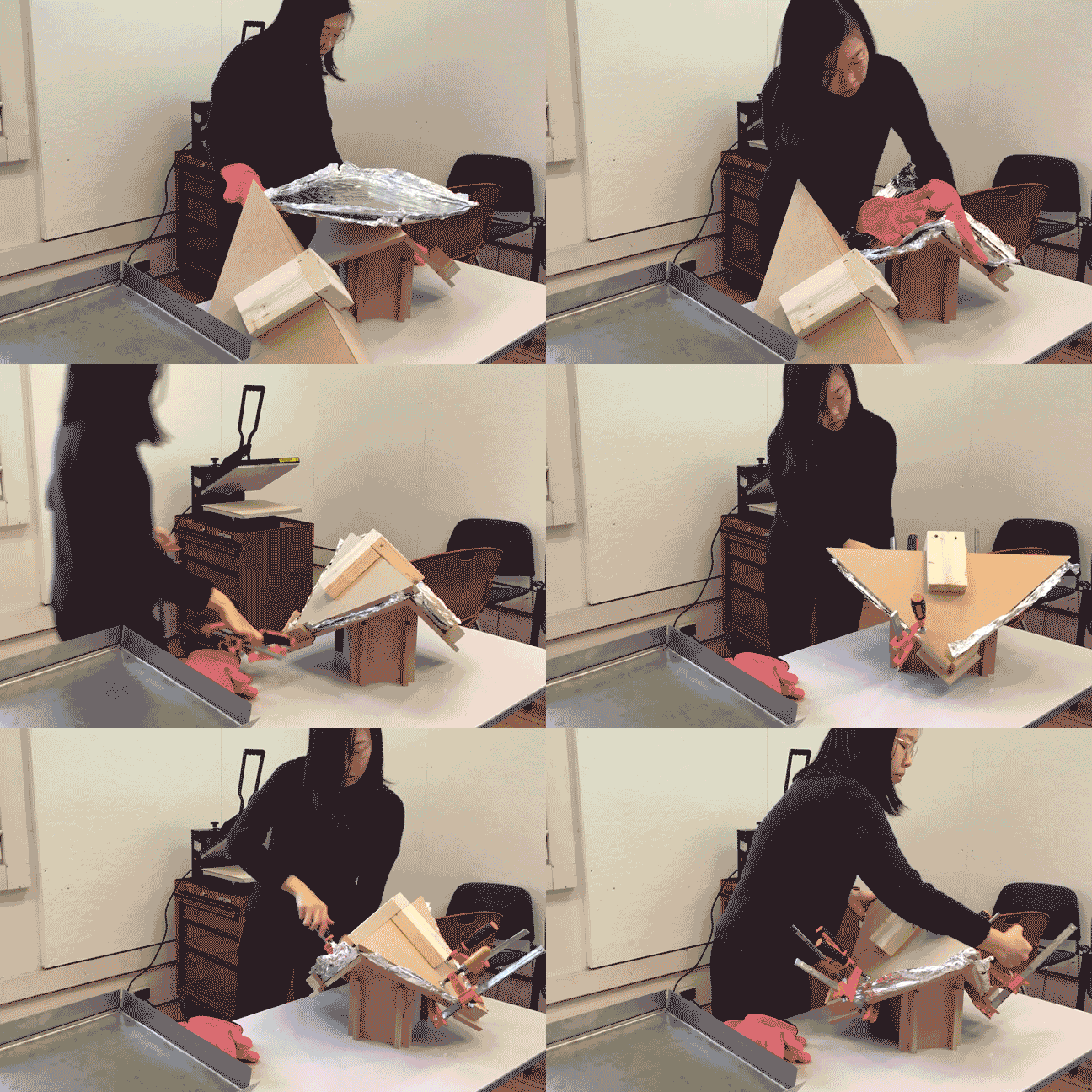
a t-shirt press: one of the d.i.y tools used for fabrication
The main issue with plastic waste is that it is imperishable, whether it is in a landfill, ocean or elsewhere. In a different context, this can be an advantage.
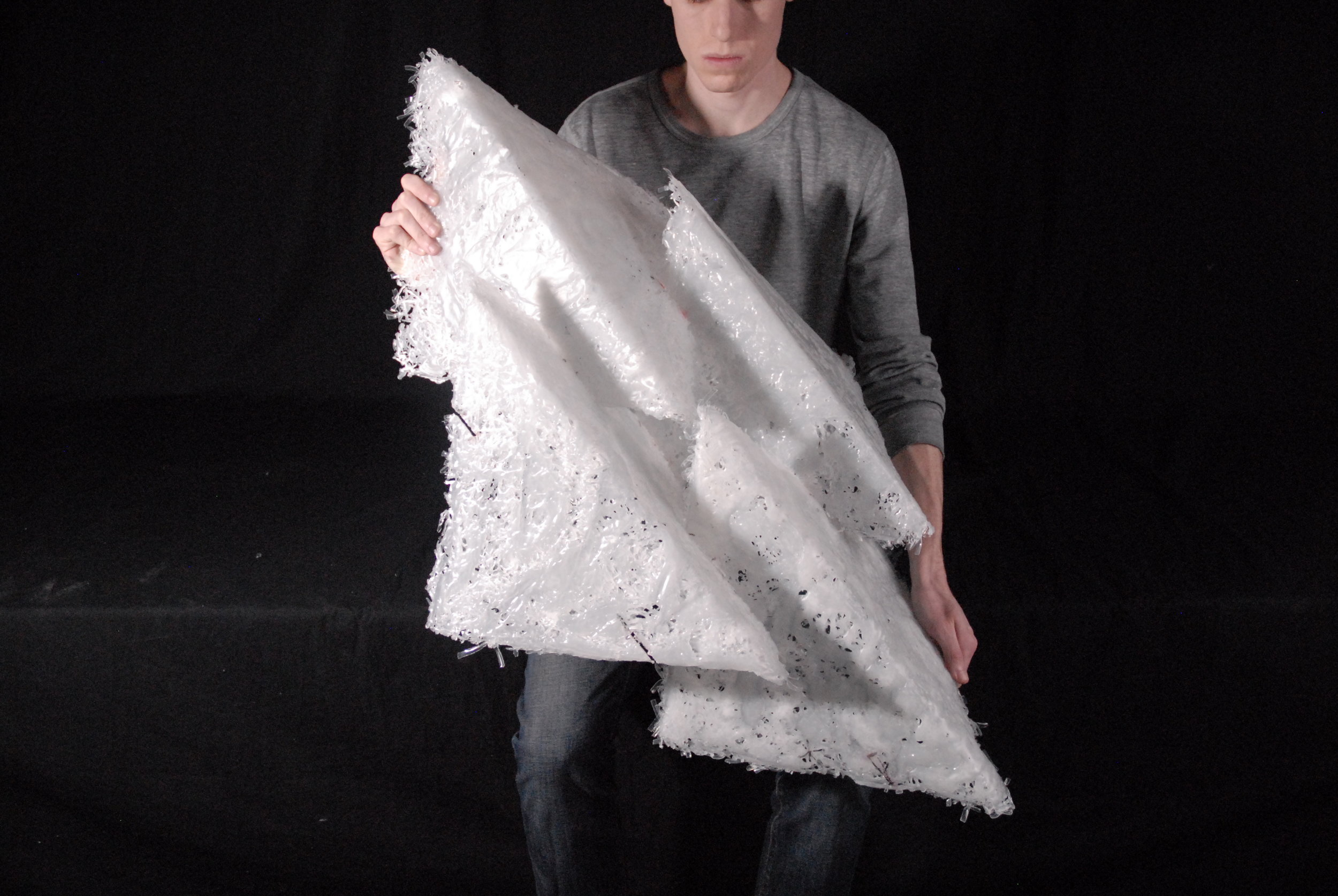
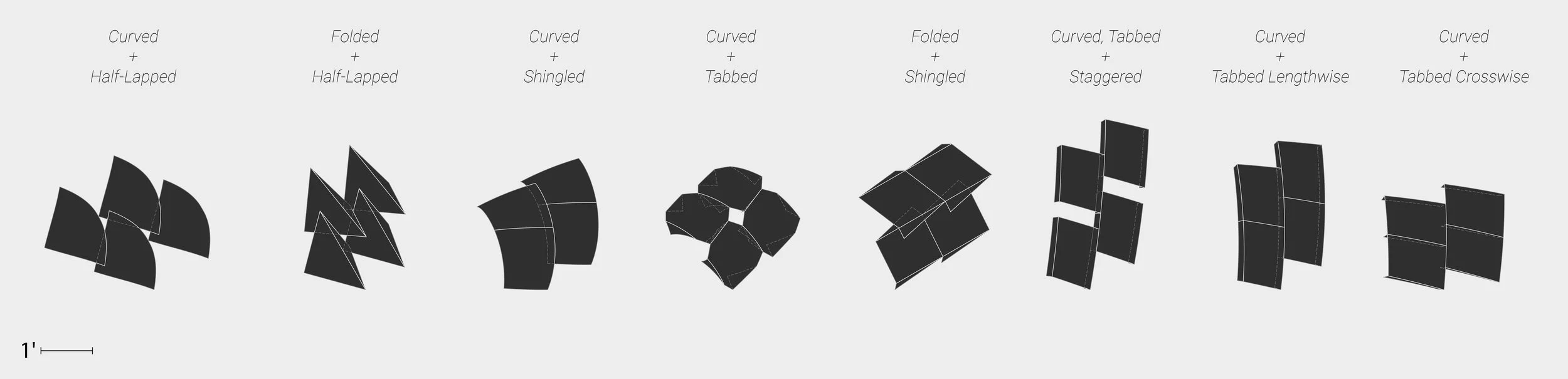
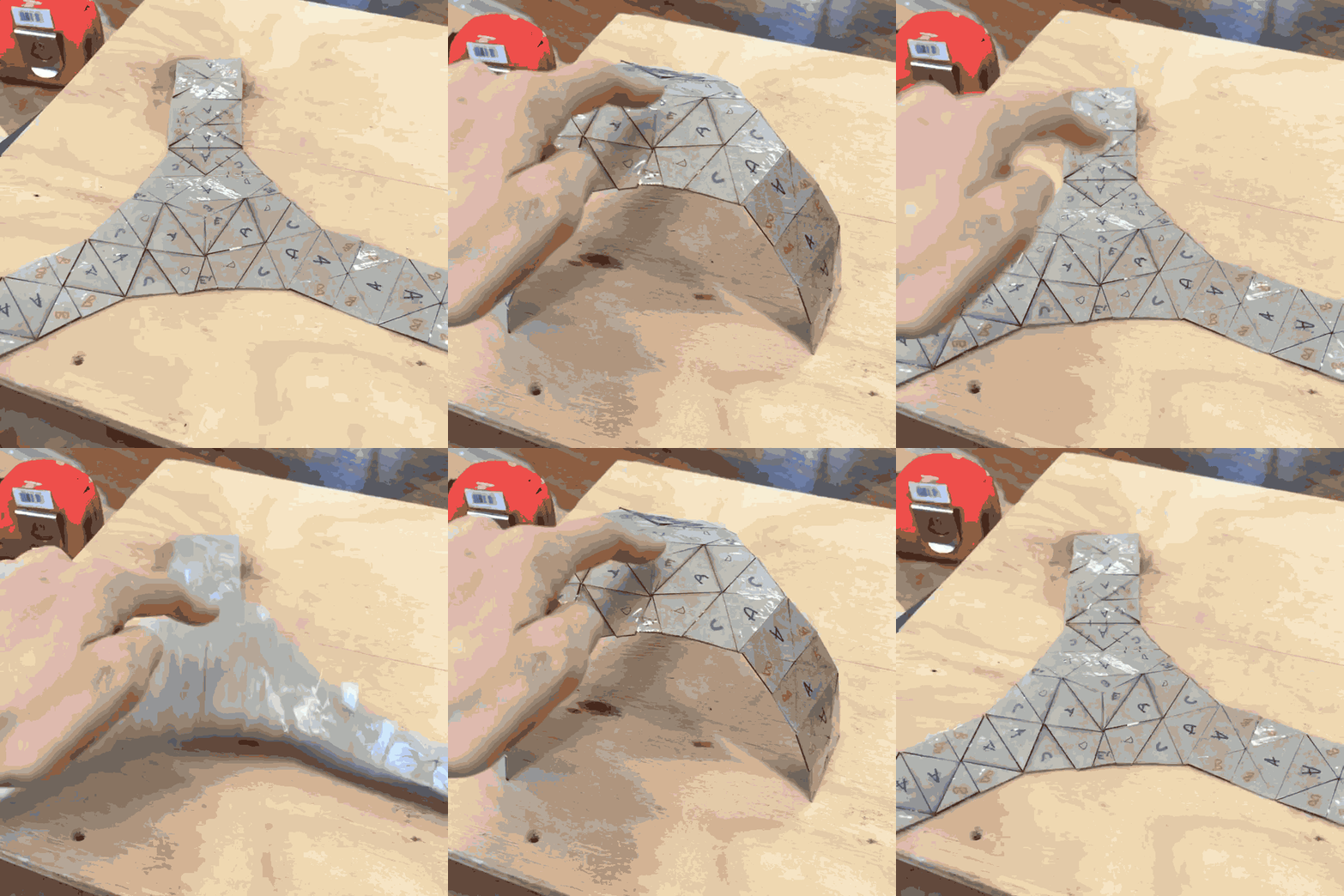
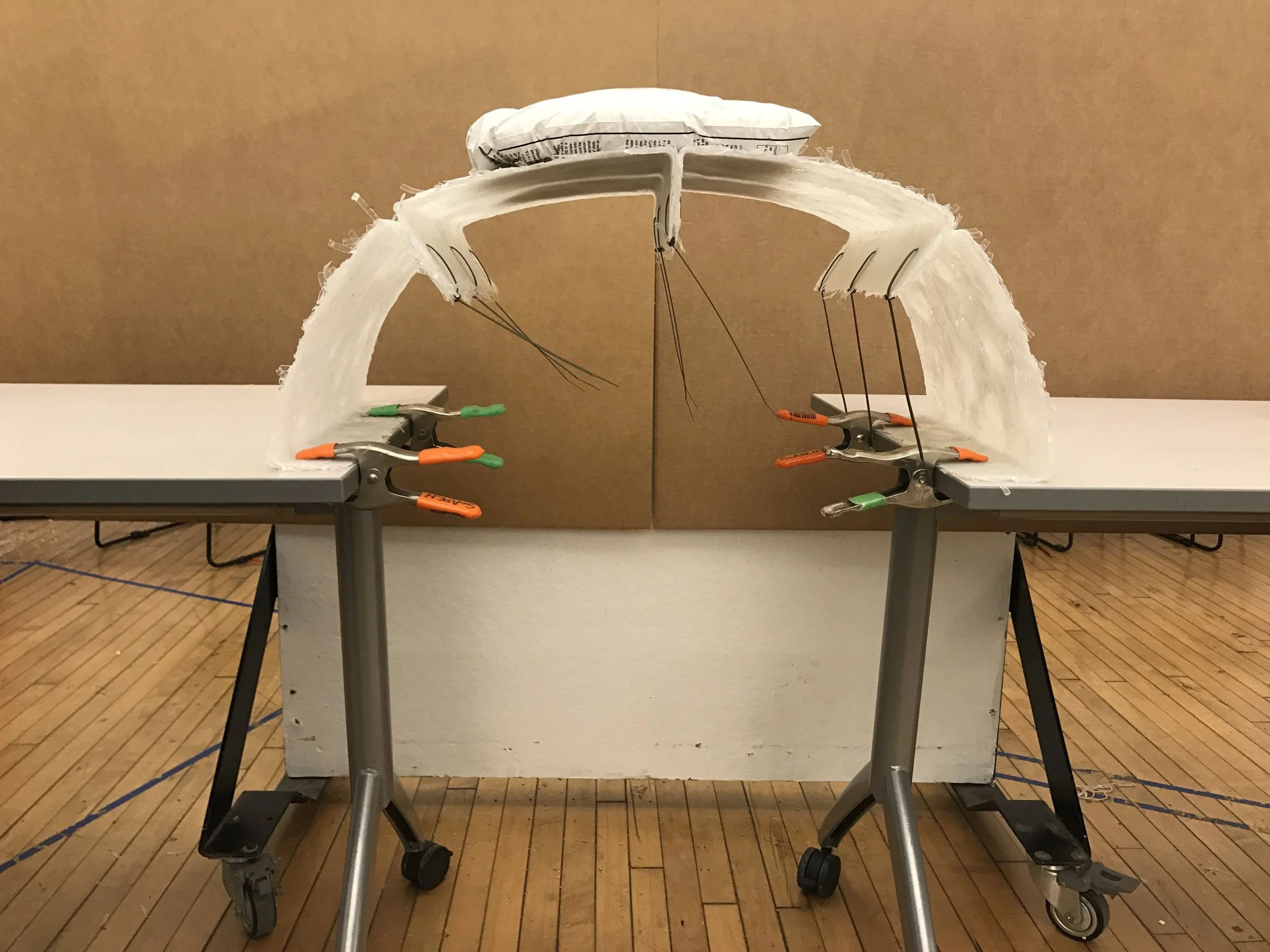
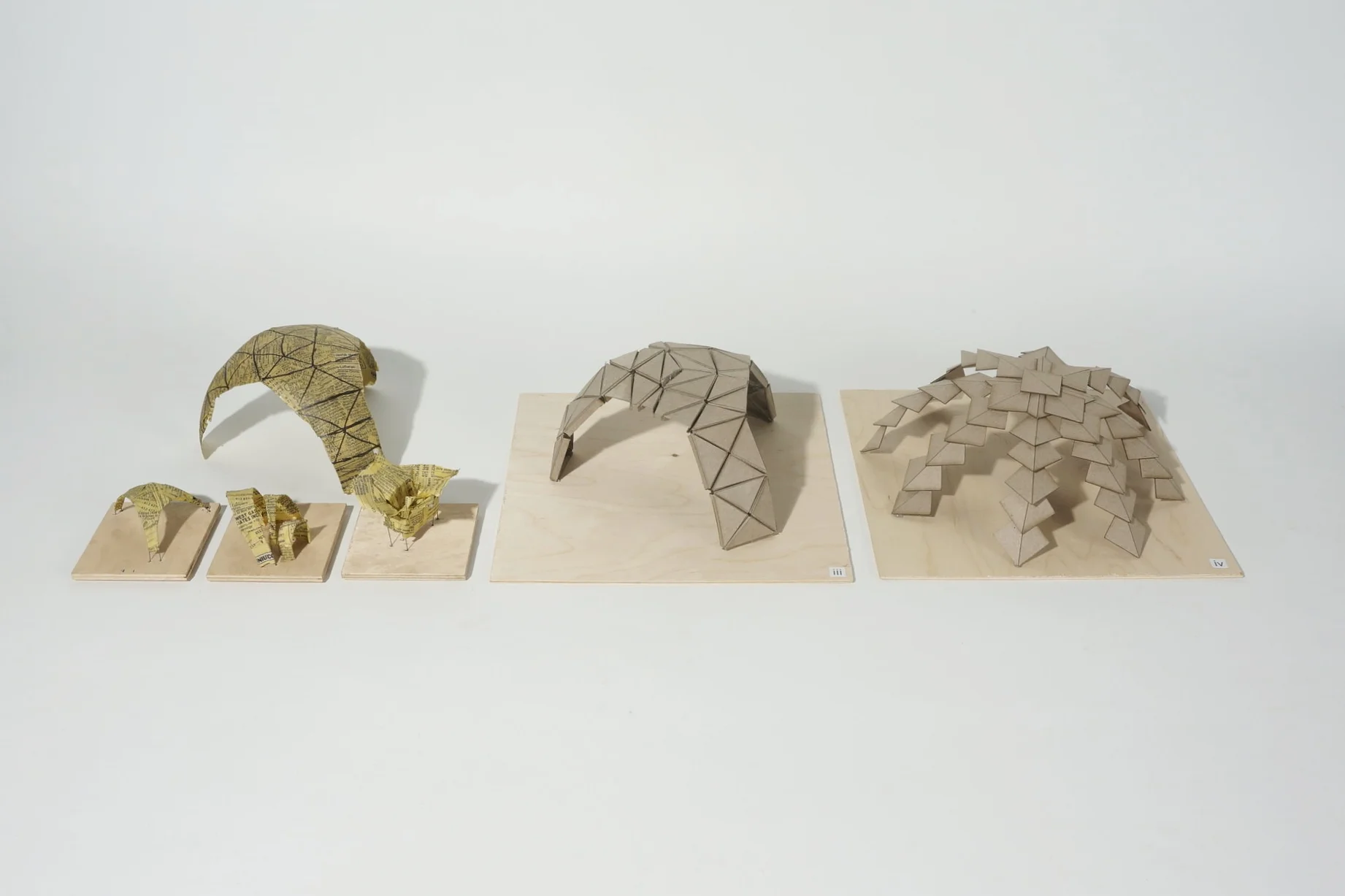
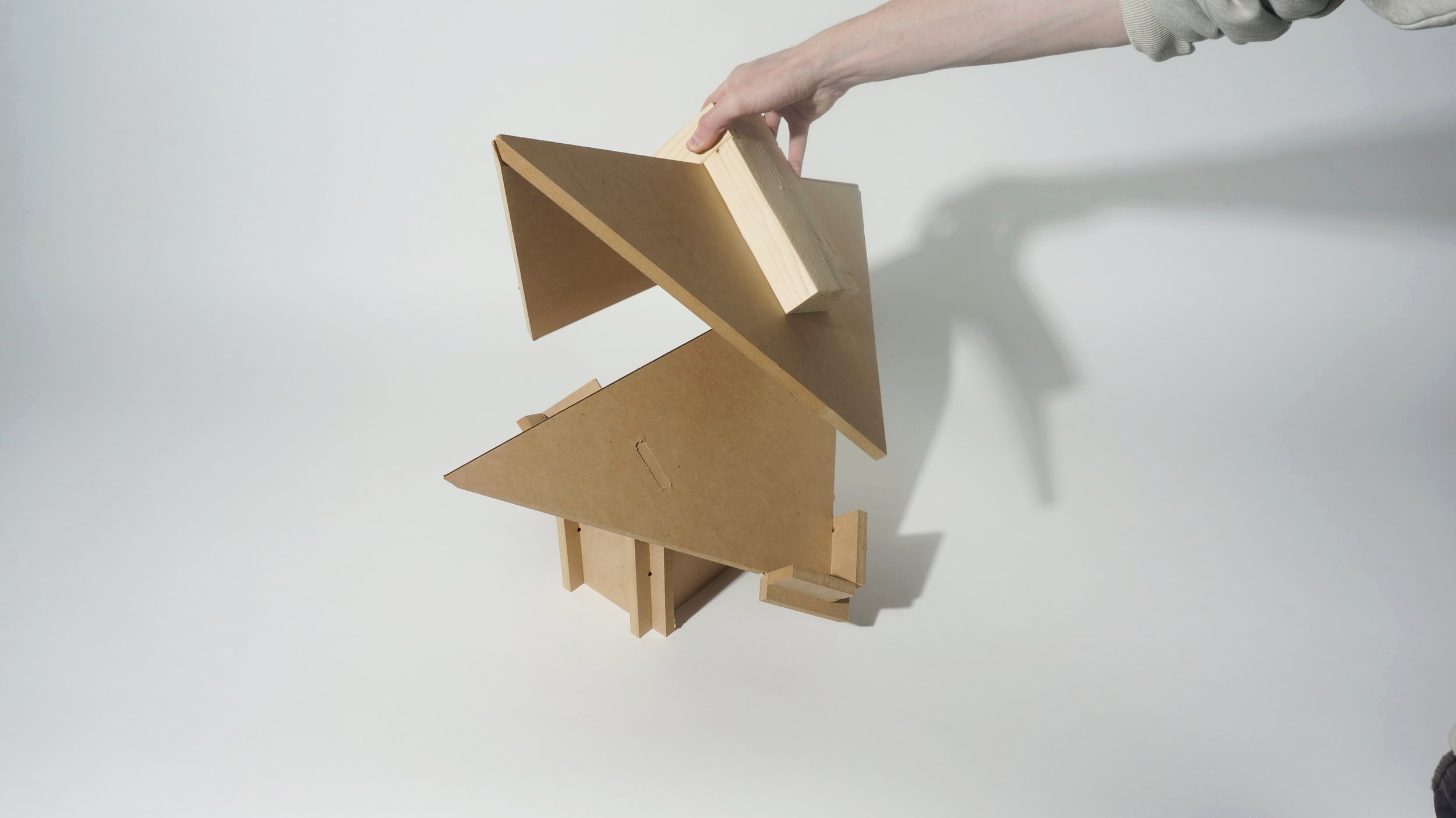
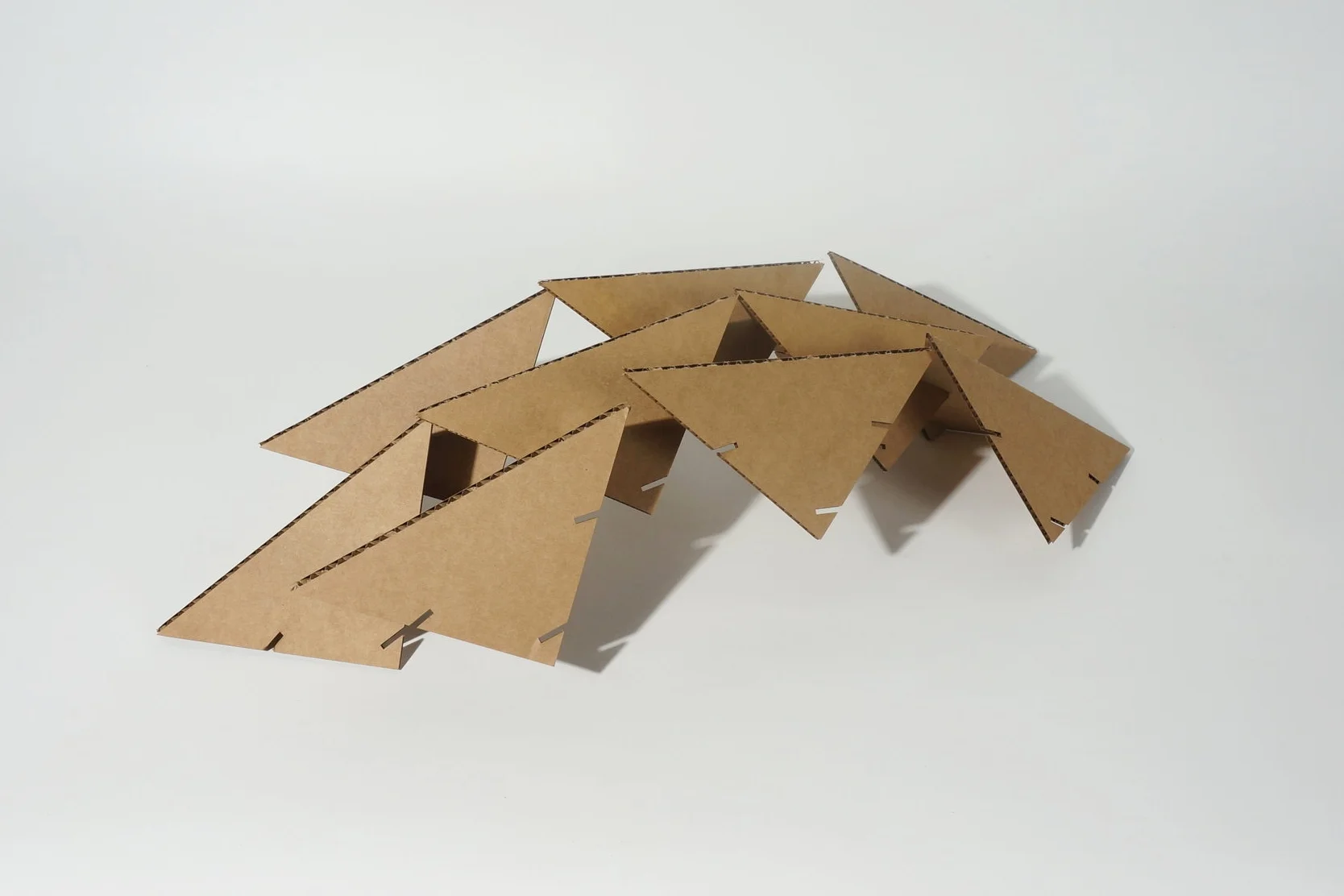
early iteration of panel geometry and assembly
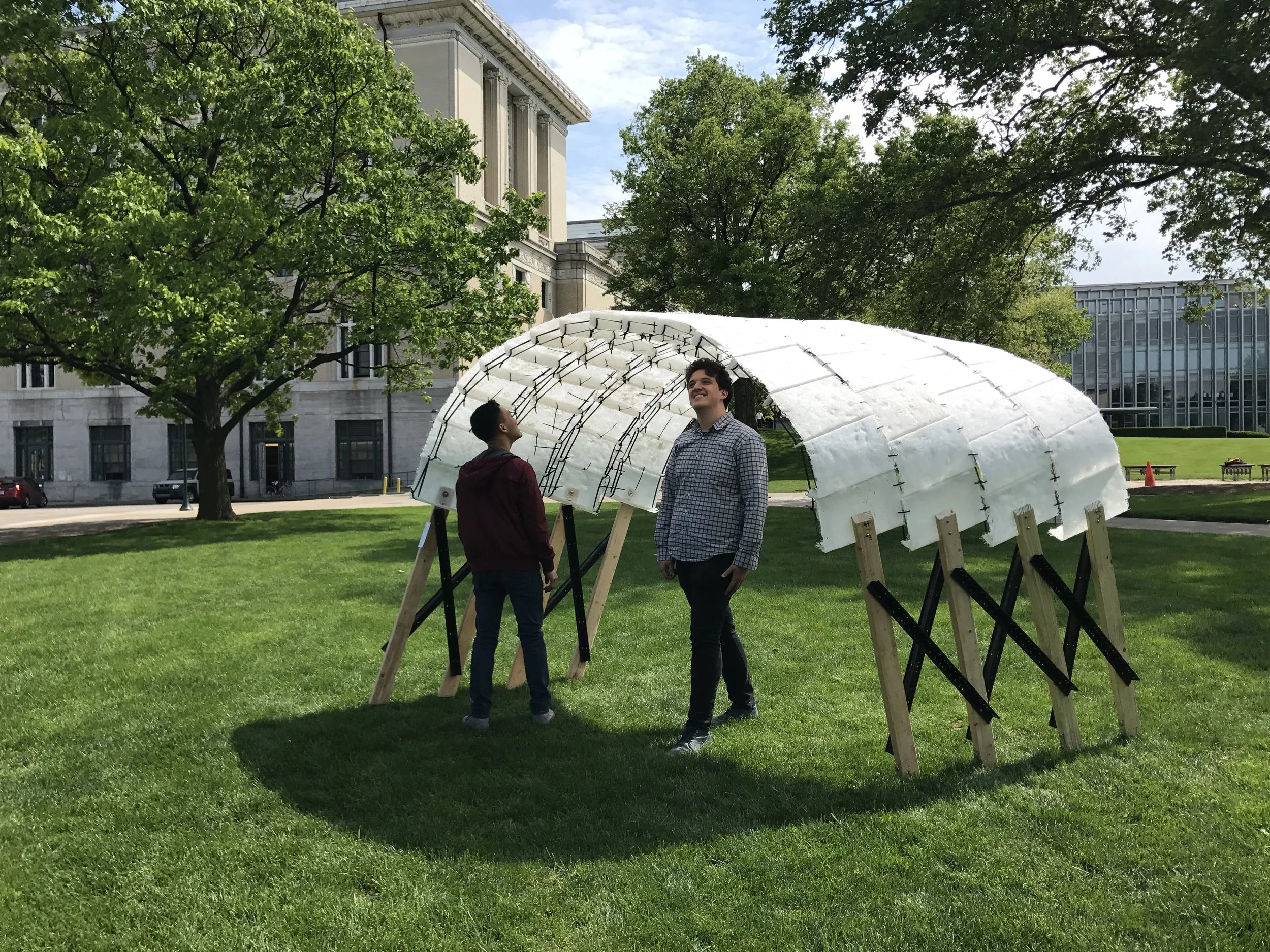
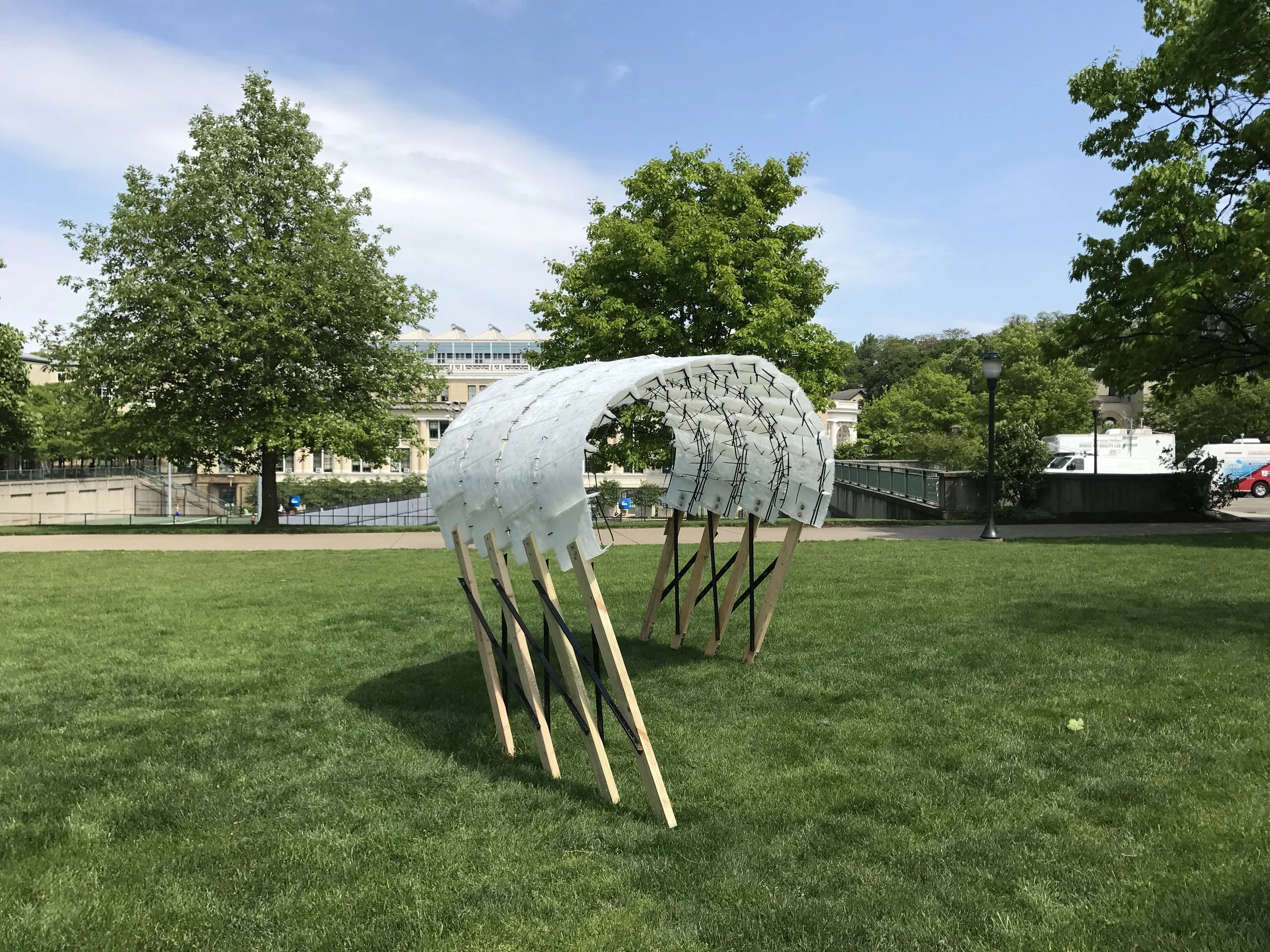
This research project sought to prove that there is potential for a material that is usually considered waste. In a semester, we researched, consulted experts, experimented, figured out a process for re-purposing polypropylene cups and built an inhabitable pavilion.
After a few weeks of research and investigation, we decided that Polypropylene (type 5) would be the our plastic type of choice for these reasons:
it is most commonly used for furniture and food storage applications because of its sturdiness
it can be recycled multiple times without significantly degrading in its strength after each cycle unlike other types
it is one of the less frequently recycled plastic types
One of the main goals of this project was to make the pavilion with accessible d.i.y tools so that this process can easily be replicated or adapted for other projects happening around the world. When we started this project, there was already a global movement of makers hacking together non-industry-standard methods to work with waste plastics. With the specifics of plastic properties being so complicated, it is very crucial for d.i.y makers to document and share their process so that others can incorporate those lessons into their own projects. We learned a lot from the many documented experiments (some successful and others not) on sites like the Precious Plastics forum and Instructables. With this project we wanted to contribute what we had discovered to the global maker movement so that others can develop off of it and not have to repeat our mistakes.
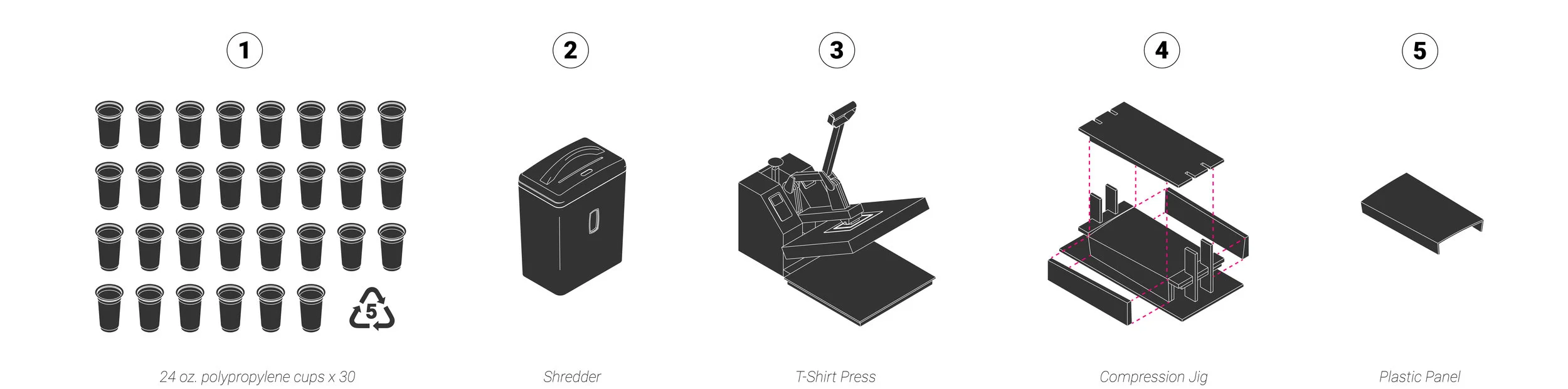
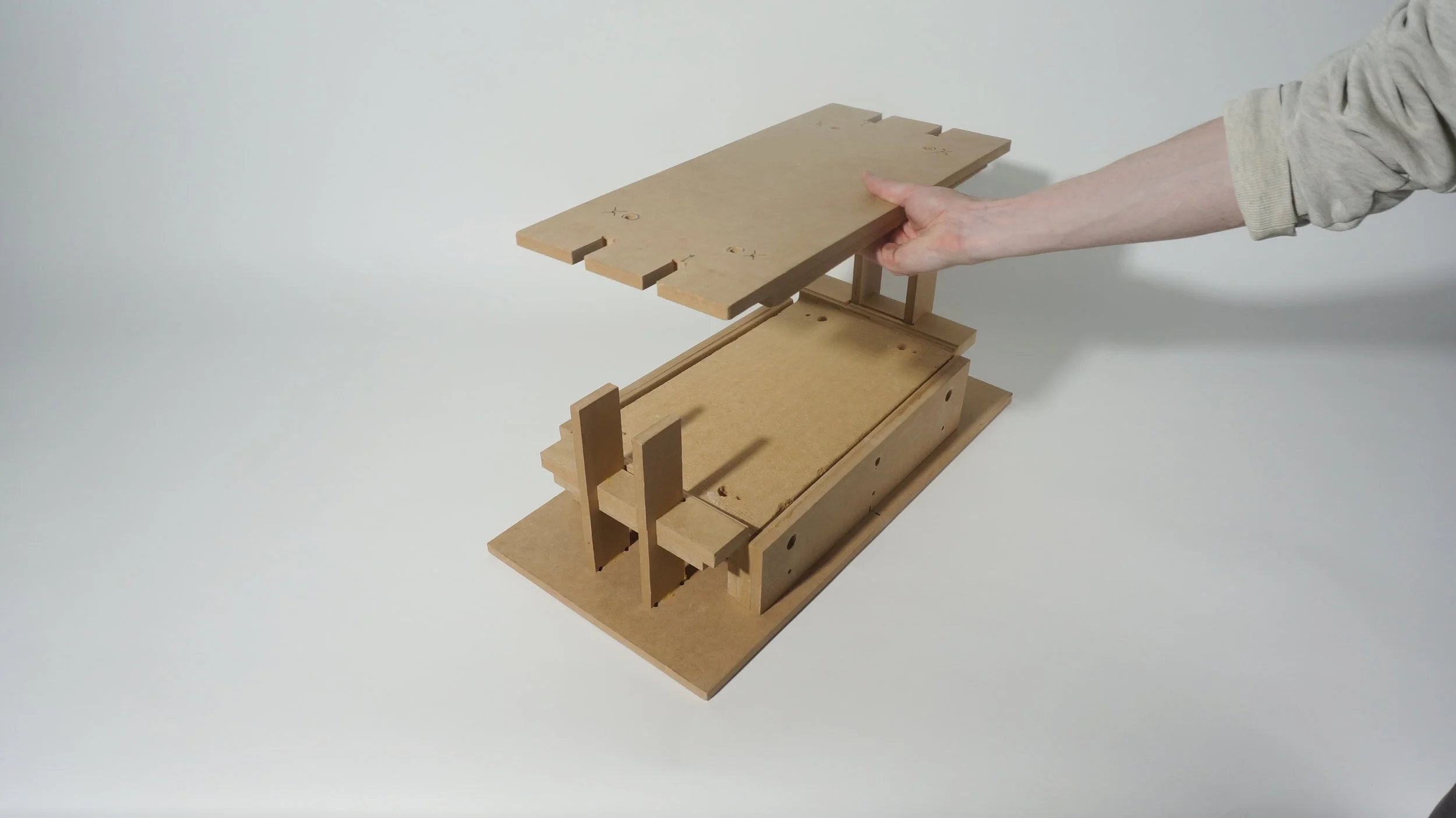
the basic breakdown: 1. 30 pp cups > 2. credit card shredder > 3. t-shirt press > 4. simple jig made from mdf > 5. one pp panel
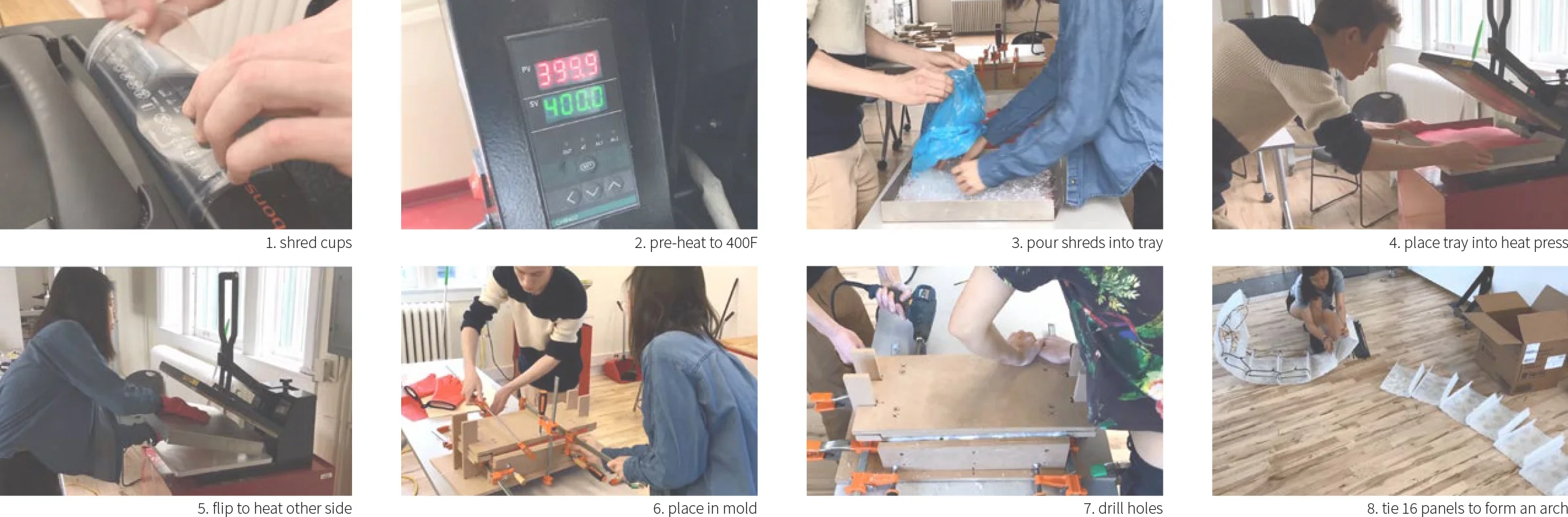
After a lot of research and experimentation, we were able to come up with a reliable enough fabrication process to produce 64 panels for assembly. The main steps in any plastic recycling project are:
Shred the plastic into smaller bits to make it easier to heat and soften
Heat the plastic bits to the necessary temperature (depends on the type of plastic)
Place in a mold while still hot so that it cools and hardens into the desired shape
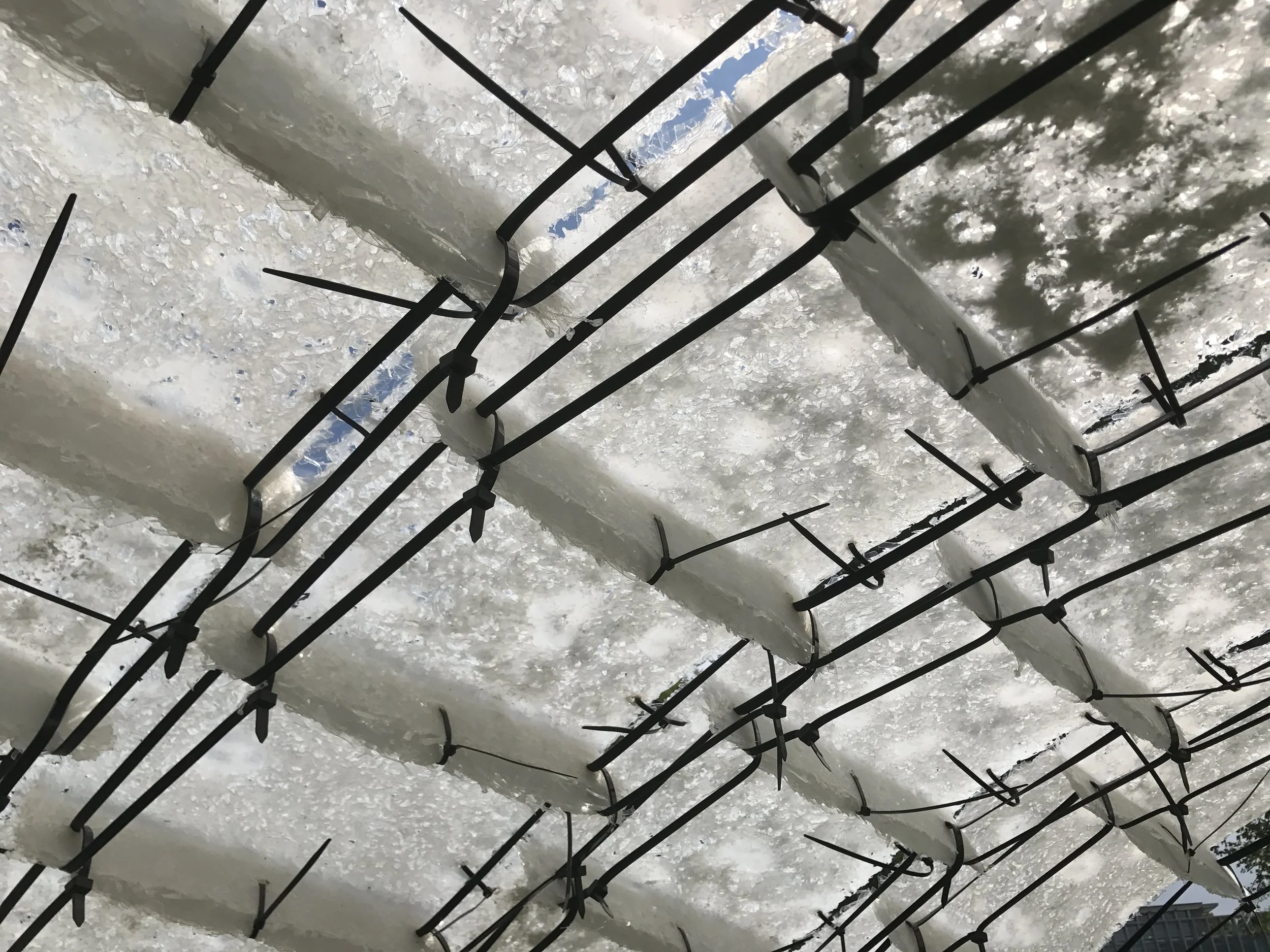
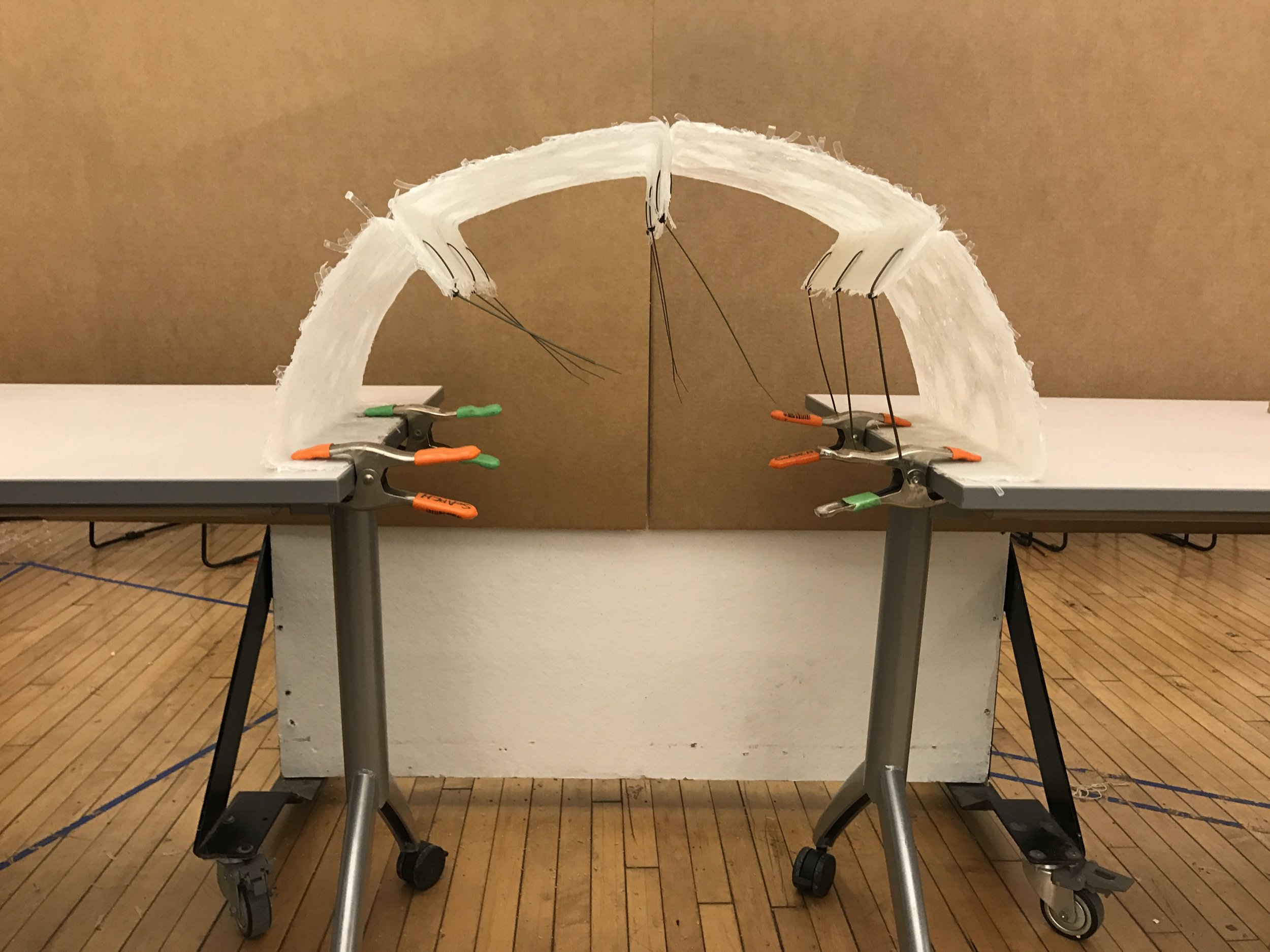
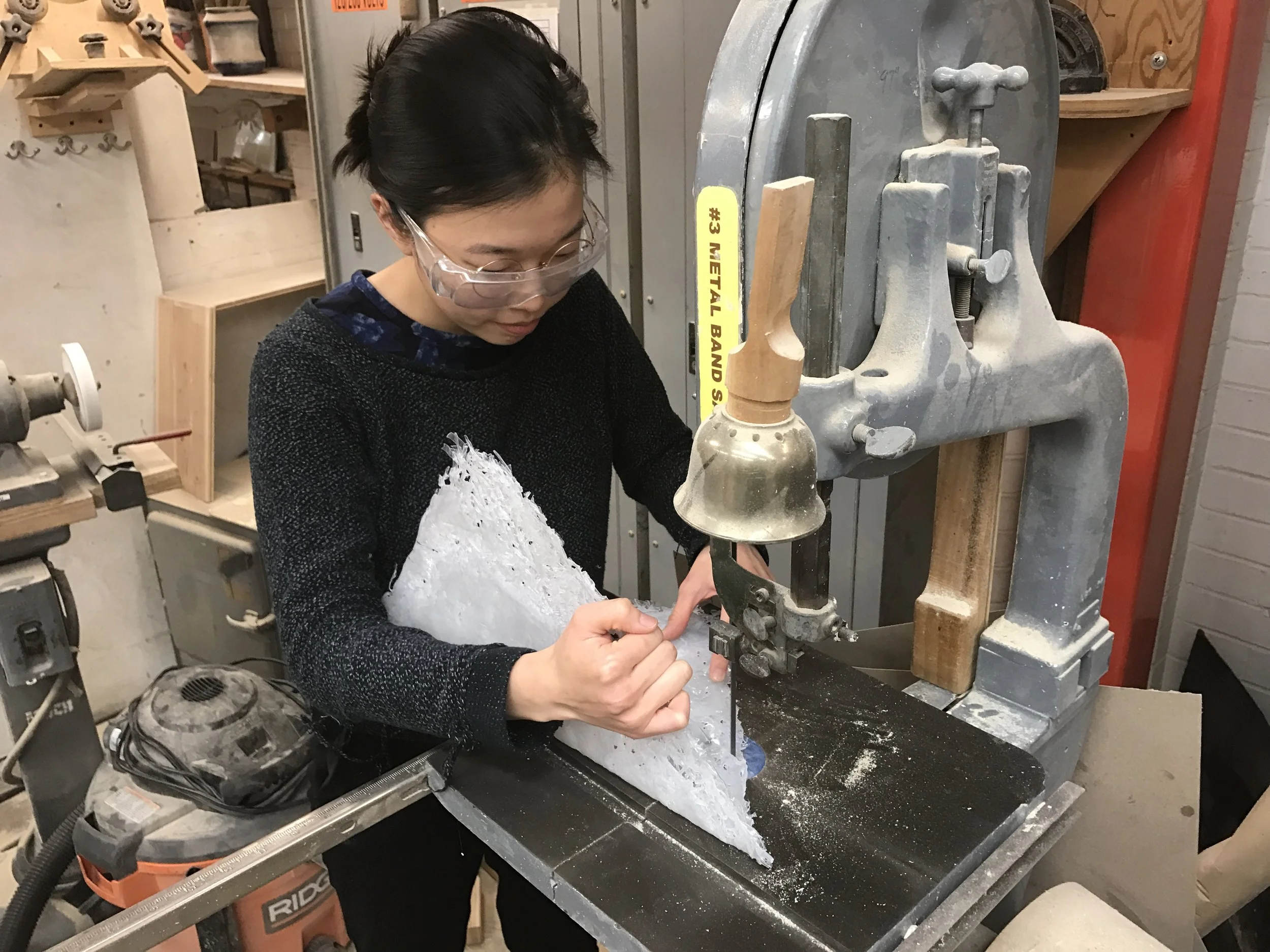
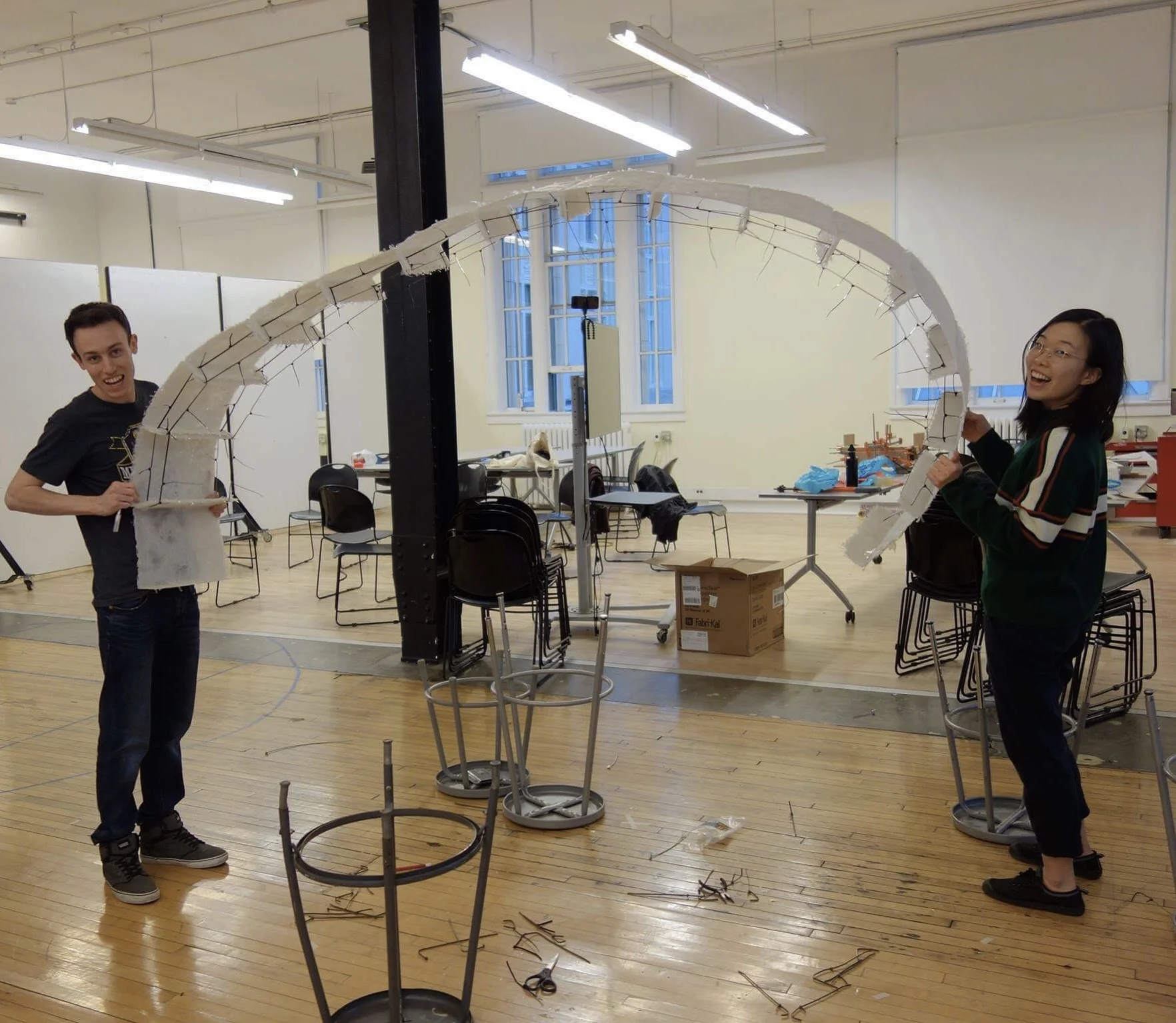
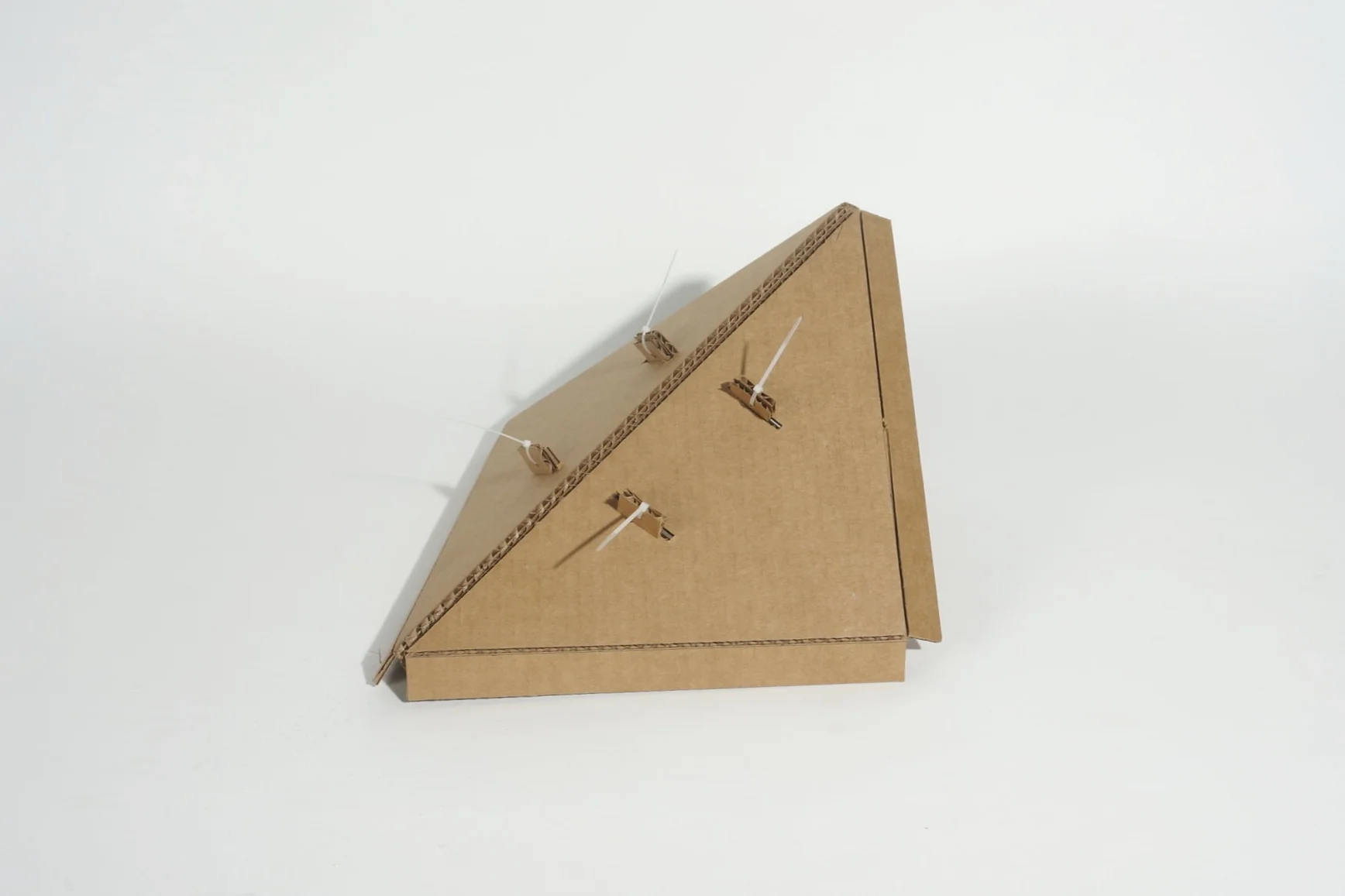
panel production and assembly
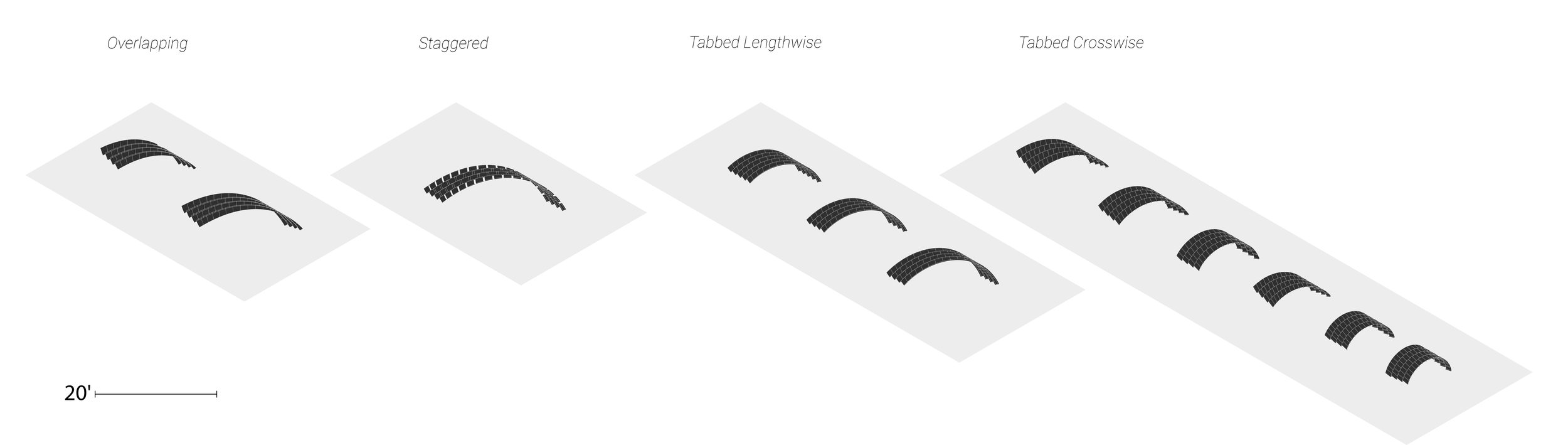
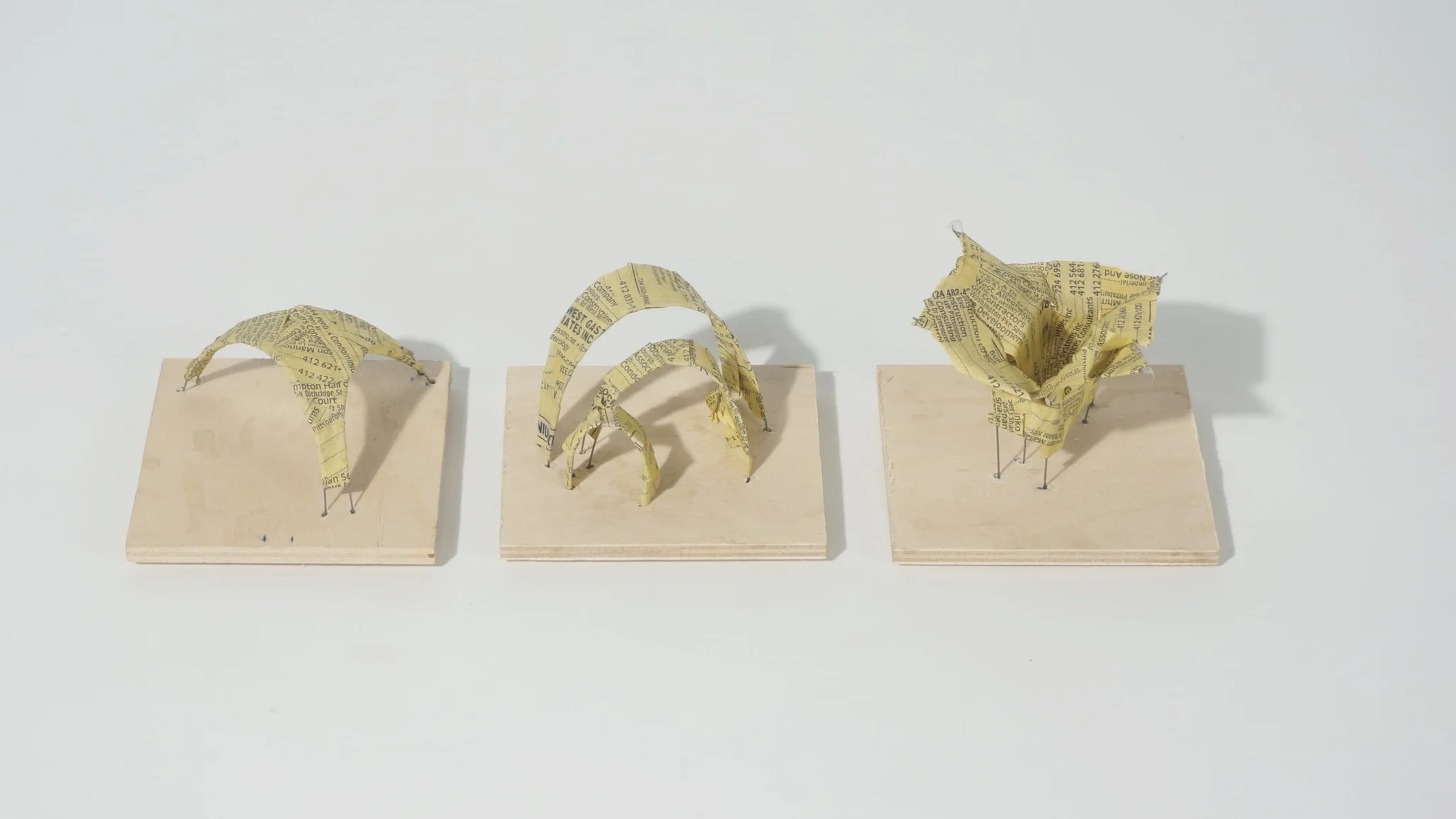
While figuring out the fabrication process, we were also iterating through numerous panel types and final pavilion geometries. After many studies we were able to develop a type that maximized surface area coverage (for the amount of cups used per panel), allowed for the most secure connections and gave us some freedom to explore more interesting forms.
in collaboration
with Bobby Esposito
advisers
overall: Prof. Mary-Lou Arscott
materials science: Prof. Robert Heard
civil engineering: Prof. Irving Oppenheim
architecture: Prof. Jeremy Ficca
computational design: Michael Jeffers
awards
First Place | Undergraduate Environmental Research Award
Runner Up | The Osher Lifelong Learning Institute Award
big thanks to
The Miller Gallery
Small Undergraduate Research Grants (SURG) @ CMU
Thesis classmates and friends who helped us along the way with manual labor and feedback (both solicited and unsolicited)